Finland’s education system grabs attention across the globe. Education researchers and policymakers visit Finland to understand its approach. Instead of focusing heavily on test scores or rankings, Finnish classrooms emphasize student well-being, highly trained teachers, and equal opportunities for all learners.
Finnish classrooms often feel different, with quiet focus replacing traditional lectures. Lessons build slowly, matching how kids actually grow. Teachers often encourage students to take responsibility for their own learning.. This freedom shapes responsibility without pressure. School days stay short, leaving space for life outside lessons. Standardized testing occurs relatively rarely. Mistakes become part of progress instead of failures. Teachers enter the profession only after extensive training. As a result, teachers are highly respected in society. Equity drives policy more than competition ever does. Other nations watch closely, though change comes slowly elsewhere.
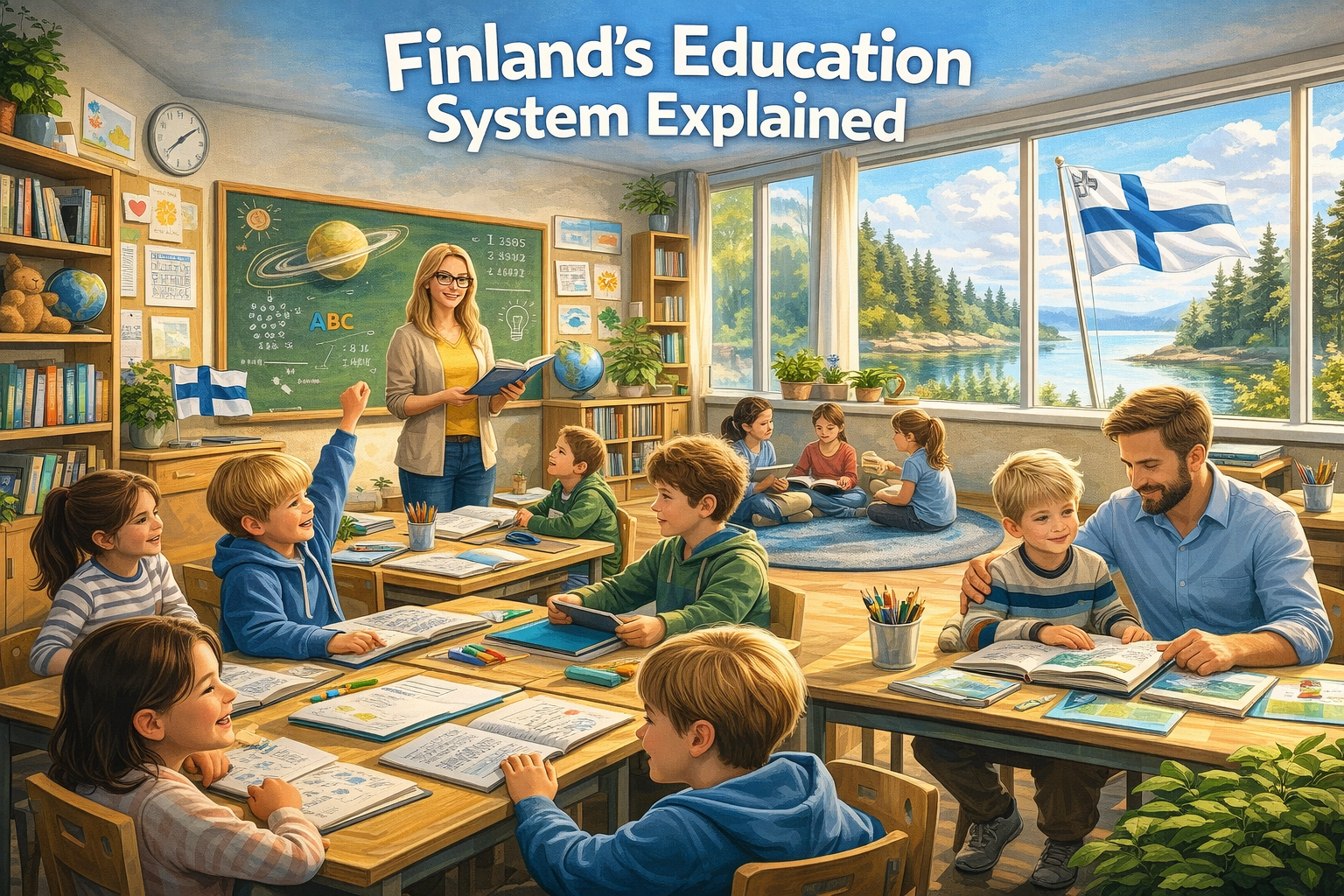
Finland’s Education System Explained
Funded entirely by the government, schooling in Finland covers every level without charging families a cent. Opportunities for education remain accessible throughout life. At every stage, students receive support that helps them continue their education.
Starting young, Finland builds its approach on solid early learning steps before moving into broad school coverage, then branching out through job-focused instruction and advanced studies. This structure ensures that students can pursue different educational paths based on their interests and abilities.
Teachers Who Are Well Trained and Looked Up To
Finnish schools shine because their educators are exceptional. Getting into teaching there means facing tough competition; entry is far from guaranteed. Most who lead classrooms hold advanced academic qualifications. Teacher training emphasizes research-based teaching methods, mixing deep understanding of topics with practical classroom techniques.
Finnish classrooms hum with quiet confidence because educators shape their own plans. Teachers are also responsible for assessing student learning. Because society values teachers’ opinions, bright minds often choose this path without hesitation. This respect helps attract talented individuals to the teaching profession.
Student-Centered Learning Approach
Learning in Finland centres on the child, not test scores. Because curiosity matters more than repetition, pupils explore ideas deeply, tackle challenges, and develop their thinking through teamwork. Spaces inside schools sparks discussion, creativity, and hands-on learning.
Few standardized tests happen in Finland. Because of this, teachers watch how students grow step by step. Teachers provide regular feedback, shaping a calmer experience. Learning feels lighter, even joyful at times.
Equal chances for all in learning
Fairness shapes how Finland runs its schools. Every learner receives equal access to education, no matter where they come from. Since public money pays for education, one school looks much like another across towns or cities.
Kids get lunch at school, plus rides to and from class, books to study from, and health checkups. Because extra help exists for those who learn differently, nobody falls too far behind. When schools make space for every kind of learner, unfair advantages start to shrink without fanfare.
Healthy Balance between School and Student Wellness
What makes Finland’s education system stand out in global education is its emphasis on student well-being. School hours are brief, and assignments outside class are few. Time opens up for play, loved ones, and quiet moments.
Moving around, having fun, playing games – these matter just as much as lessons during school hours. A classroom that feels kind and steady helps kids stay calm and want to try. When learners smile more, they pay attention longer, and their scores rise without pushing harder.
Innovative Curriculum and Future-Focused Skills
What if school felt more like solving life’s puzzles? In Finland, classrooms blend tech skills naturally into everyday lessons. Learning jumps between subjects, guided by themes drawn from reality. Instead of separate classes, kids explore big ideas that tie knowledge together. This way, understanding grows through connection, not division.
Out of every lesson comes a quiet kind of growth, voices learn to connect, hands work together, and ideas spark where none stood before. When change hits fast, these pieces stick. A mind tuned to fresh problems finds its footing quicker than most expect.
Government Backing and Rules
From early morning decisions to late-night reviews, Finland’s leaders shape schools through steady effort. Because learning matters deeply there, choices grow out of studies instead of election cycles. Money flows without sudden stops, letting ideas breathe before becoming real. Even small changes wait until trials show they work.
Working together closely, schools team up with local governments alongside national agencies. Because of this teamwork, rules get put into practice smoothly while classrooms gain access to necessary support.
Worldwide Scores in School and Job Results
Top scores keep showing up from Finland when global tests like PISA roll around. Reading, math, and science pupils land near the top spots. Because of how they learn, schools across the country stand out when measured against others worldwide.
Finnish classrooms often feel different learning unfolds quietly, without pressure. Because trust matters more than testing, kids thrive alongside their teachers. A calm environment grows confidence naturally. Success shows up not through rankings but in how students carry themselves each day.
What Finland Does Differently That Others Might Notice
Finnish schools often draw attention from nations aiming to rethink their classrooms. One takeaway? Strong support for educators’ professional growth matters deeply. A smaller gap between rich and poor learners tends to show up where policies prioritize fairness. Well-being of pupils sometimes takes quiet but steady precedence over test scores. Creative thought blends into daily work, not as an add-on but woven through subjects. Thinking differently becomes routine when curiosity drives more than pressure.
Finnish results don’t come just from policy; deep-rooted community values shape outcomes too. Though contexts differ across nations, pieces of their approach still fit elsewhere when reshaped carefully.
Conclusion
What makes Finland’s education system top the global education rankings? A focus on strong teachers, fairness, student health, plus learning built for tomorrow. Finnish schools demonstrate that strong results can be achieved without constant exams or excessive pressure. Outstanding outcomes grow where trust matters more than control, inclusion replaces exclusion, and creativity wins over routine.
Still learning how things shift over time, Finland shows clear examples for those shaping schools and rules around teaching. Instead of rushing ahead, progress comes through listening to learners, standing behind educators, and leaving room for growth. Progress happens when attention lands where it matters most: classrooms, trust, and long-term choices made today. What lasts grows quietly, shaped by steady care more than sudden change.
Contact Us
Contact us for a free consultation for student or visitor visas. Our immigration experts are ready to assist you.