Introduction
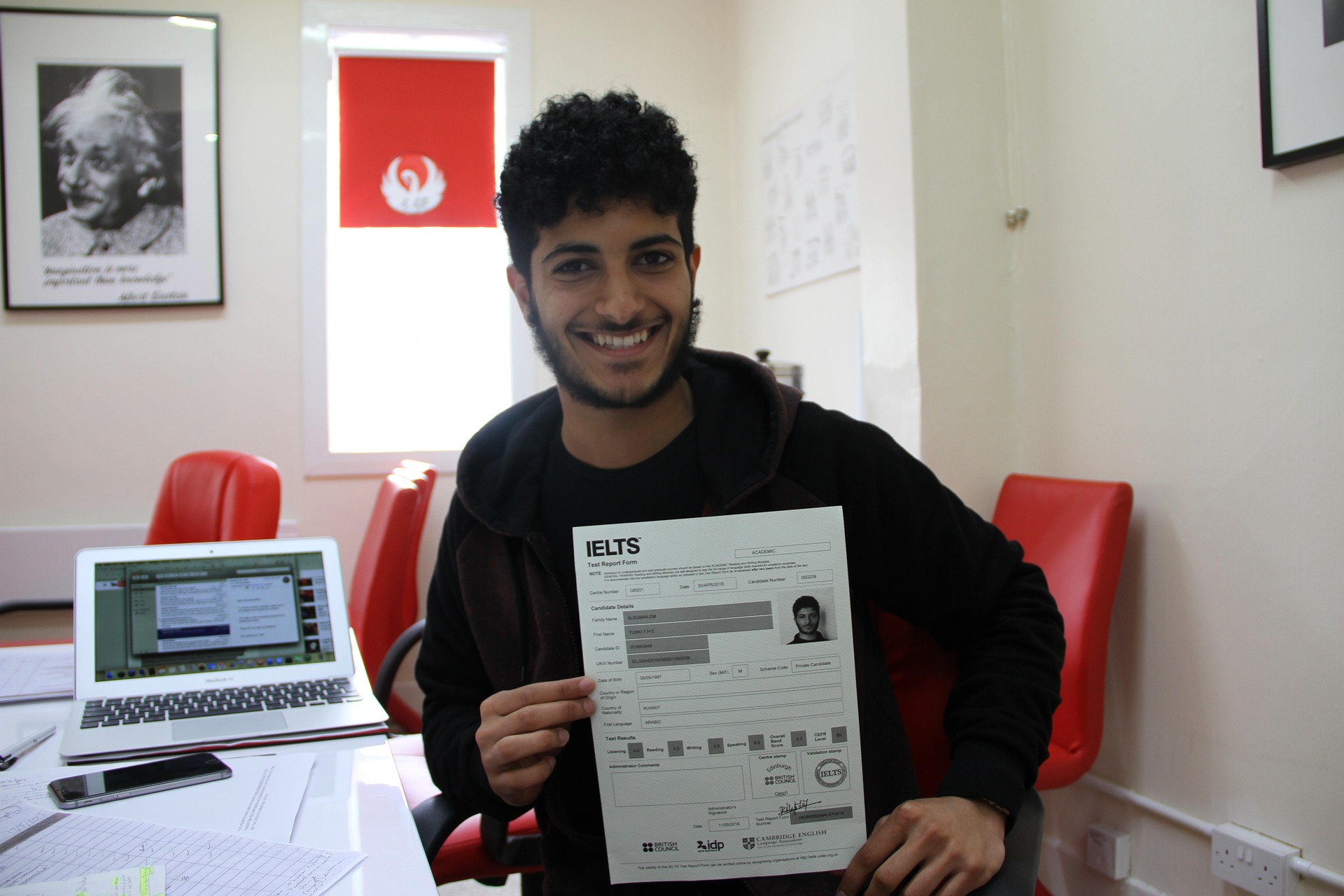
Band 8.0+ scores in the IELTS are an indicator of great English language proficiency and a ticket to some of the best universities, visa eligibility, and a successful career around the world. However, many students find it hard to figure out what it takes to score this band on their exam. An IELTS Band 8 is more than being proficient in English; it is an accurate display of high-level fluency and skillful performance in all four aspects of the test – Listening, Reading, Writing, and Speaking.
One thing that all Band 8+ students have in common is that they never depend on chance and rote learning. Instead, these students develop a system and work towards strengthening their weaknesses by practicing in a test-like environment. In this article, we will be discussing tips and advice from successful students who scored Band 8+ in IELTS.
Understanding the IELTS Band 8 Benchmark
To know how to score Band 8 in IELTS, it is vital to know what exactly it means to be at the Band 8 benchmark. It refers to candidates who can speak English “very well.” They can express themselves fluently, but sometimes they make mistakes that have no impact on comprehension.
In simple terms, it means candidates should demonstrate proficiency in the language by mastering grammar, using appropriate vocabulary, and presenting complex concepts with ease. In practice, candidates can discuss challenging issues like global warming, educational reforms, or innovative technologies confidently in the speaking or writing sections.
Most students find it difficult to attain this band due to common pitfalls. First, they depend on memorized expressions. Secondly, they make repeated grammatical mistakes during the examination due to time constraints. Therefore, it is crucial to know the common reasons for failure before setting out to attain IELTS Band 8.0 or above.
Effective Study Techniques Used by Band 8+ Students
Consistency rather than intensity is the key lesson learned from those who have succeeded at the IELTS exam. In other words, band 8 students do not study haphazardly but rather follow a certain plan to develop the four basic skills each day.
The development of solid language skills should start with strengthening one’s foundations in English. It means working on perfecting grammar rules, enriching your vocabulary, and using language actively. Thus, for example, instead of merely memorizing the word “important,” Band 8 students try to master synonyms for this word, like “crucial” or “significant.”
A final recommendation is to practice doing the actual IELTS exercises. Those aiming at achieving Band 8 scores practice regularly with Cambridge IELTS books and papers, trying to take practice tests within the prescribed period of time. An example of such a schedule could be taking one reading practice test every two days and correcting mistakes instantly.
Tips for Listening to get Band 8 or above
The most prominent technique for getting band 8 and above for listening tests among good students is prediction and concentration. At the beginning of each audio clip, students should first understand the questions and then try to predict the answers.
Suppose a question like “The lecture will take place in the hall” is asked; then, students should anticipate words associated with the location, such as “main hall,” “conference hall,” or “lecture hall.”
Students should also listen to various accents like British English, Australian, and American to increase their adaptability skills.
Reading Strategies
Reading is usually one of the most difficult parts of IELTS, especially because of time constraints. Band 8 students apply skimming and scanning skills proficiently. They do not need to read every single word; rather, they can recognize crucial information by scanning the whole text.
For instance, if the text mentions renewable energy, Band 8 candidates do not need to read the entire text. Rather, they look for relevant terms such as “solar energy,” “wind energy,” or “carbon emissions.”
Time management is essential in this part. Typically, high-scoring candidates spend no more than 20 minutes on each text.
Writing Tips
The writing module tends to be among the most difficult to obtain an 8-band score from. The student should demonstrate good task achievement, coherence and cohesion, and lexical resource.
For instance, in writing Task 2, a well-done essay can be seen below:
“With technological developments taking place in today’s fast-evolving world, communication between individuals has been revolutionized in many ways. Although there have been arguments regarding the adverse effects of such a development in relation to reducing face-to-face contact, my personal view is that this transformation has resulted in increased global connectivity in unparalleled ways.”
Clearly, the introduction has used advanced vocabulary and presents a well-defined point of view.
An 8 band-level writer also does not repeat simple words. “Important” should be replaced with more sophisticated words such as “essential,” “crucial,” and “paramount.” Complex sentence structures should also be incorporated.
In Task 1 writing, a student should describe graphs using more elaborate words. For instance, a good description should be written as “a steady upward trend” rather than “went up.”
Speaking Tips
Band 8 students will need to have good fluency and naturalness when speaking English. Students should not attempt to give any memorized answers, but instead concentrate on speaking more naturally.
In answering a question like, “Do you like reading books?” a Band 8 level student might say:
“Yes, I do. I really like reading books, particularly those that discuss psychology or people’s behavior in different contexts.”
The answer to the above question is quite natural and includes some explaining too, rather than merely saying “Yes.”
One other useful technique involves paraphrasing. In paraphrasing, the question will be expressed in different terms without repeating it word for word.
Daily Practices of Successful IELTS Test Takers
Students who score Band 8+ in the IELTS exam integrate English into their daily routine. Students read articles, blog posts, and research papers in English to enhance their comprehension skills and expand their vocabulary.
Another useful practice involves listening to podcasts, interviews, and TED Talks. Some test takers watch videos in English without using subtitles.
Successful candidates also practice speaking English regularly. Most students record their answers to various IELTS questions and review them to correct any grammatical errors and pronunciation problems.
The most effective practice that successful test takers apply involves learning new words within a sentence rather than memorizing long lists of vocabulary. Instead of just remembering the word “significant,” students learn its usage in a sentence like, “There has been a significant rise in global temperature in recent years.”
Time Management and Test Day Approach
During test day, proper time management will help get the desired score – at least Band 8 or above. Effective candidates usually come early, remain calm, and do not rush at the last minute.
Before taking the test, they practice revising important vocabulary and familiarizing themselves with possible questions, but not filling their head with unnecessary information. While answering, they adhere to the set time frame and do not waste time on complex questions.
In the case of the reading part, when faced with challenging questions, Band 8 candidates skip them and try to answer later if there is enough time left. It helps not to lose points because of improper time management.
After each part, they should not be overly concerned with errors since such behavior may negatively impact their further performance in other sections.
Recommended Materials to Help Students Get Ready
To adequately prepare for Band 8 IELTS, the recommended materials include official Cambridge IELTS books because they give authentic test questions. Websites will help with practice tests, vocab building, and even speaking.
Another important material that students need is feedback from their teacher or IELTS tutor. Feedback gives you an idea of the parts that you struggle with.
Some apps help students build vocabulary, listen, and correct grammar errors.
What Is the Time Duration for Attaining Band 8?
It takes a certain period of time for the students to achieve band 8, which depends on their learning stage. For intermediate-level students, it might take up to 3 to 6 months of dedicated efforts, while for advanced-level students, the period may be relatively shorter.
Nevertheless, the decisive point is not time but rather the approach that students adopt during their preparation process.
Conclusion
The process of learning how to get at least a Band 8.0 on the IELTS Test involves far more than just learning the English language. It takes a lot of discipline, good strategies, and regular practice for high scores. Top students strive to increase their proficiency across the four major categories without making typical errors, such as memorizing and poor time management.
Vocabulary development, practice with real IELTS material, fluency in communication, effective strategies, and many other aspects contribute to a successful result in obtaining at least a Band 8. The IELTS Band 8 Test may be difficult, but it is absolutely possible to achieve.
In conclusion, high IELTS results are achieved by being precise and consistent, rather than striving for perfection.
Contact Us
Contact us for a free consultation for student or visitor visas. Our immigration experts are ready to assist you.