It can be hard on any parent to discover that their child has failed a class when they were supposed to go and study overseas. This kind of problem becomes especially worrying when you know that your child is far away and might need your help and support. Immediately, you start thinking about how hard things will become for your child – will they be able to finish their studies on time, and will it affect the student visa?
But it must be understood that one bad mark does not necessarily mean that everything will go wrong for your child. There can be numerous reasons why students fail classes. And in such a case, the most effective thing to do is to remain calm, understand the situation and come up with further plans of action.
If your child fails a class overseas, there is no need to focus only on this particular issue.
Talk to Your Child About What Happened
The initial move should be an open, yet compassionate discussion. First, allow your kid to tell you what actually happened before thinking of a solution. Questions can be something like: What did they find hard? Did the course material seem easy to understand? Did they feel ready for exams or homework? And anything else related to what could have gone wrong.
Remember not to criticize at once; try to listen first, since your kid might already be feeling disappointed, embarrassed or afraid of letting you down. The point here is not to find out whose fault it was. The point is to find out what actually went wrong in order to prevent the same thing from happening next semester.
Find Out Why Your Child Failed the Class
Having talked to your child, try to figure out what exactly caused your child’s poor performance in the course. There could be different reasons for academic problems, especially if we consider international students.
The problems could come from poor teaching methods applied in the university or assessment practices of the university. Also, your child could find it hard to handle a heavy workload, understand the requirements of higher education institutions and balance education with other commitments.
Language could also be the problem even if your child is good at speaking English because some things like academic writing, lectures, and technical language could be problematic in a new educational setting. Some other causes could be missing assignments, poor attendance record, inefficient studying habits, inability to prepare for exams, or difficulties in adapting to a new place.
Finally, it is essential to establish whether the problem occurred only with one course or is part of a general trend of poor academic performance.
Check the Academic Consequences
When you know what caused the failure in the class, find out exactly what it means for your child’s academic standing. First, review the academic policies at your child’s university. See if the class needs to be taken again and if your child can repeat it the next semester, in the summer, or any other time.
In addition, find out how the failed course impacts your child’s GPA and whether it will impact their academic standing. Many universities require their students to maintain their grades above a certain level; otherwise, the student may be placed on academic probation.
Another thing that you need to check is whether the failed class is needed for your child to graduate. In case the class is a prerequisite for other classes, it may affect your child’s course plan or graduation date. Lastly, if your child receives any scholarships or financial aid, see whether there are academic requirements associated with it. One course failure doesn’t necessarily mean that your child will not receive money anymore, but it still needs to be checked.
Check for Immigration or Student Visa Consequences
For international students, a bad grade could also lead to immigration issues aside from poor grades. Therefore, one thing that you should look at is whether the failed course could impact the student visa of your child. The repercussions will be different based on the country, immigration rules, university, and personal details of the student. Some of these issues include student status and any possible changes in the student’s academic plans.
Instead of thinking that a bad grade means immigration problems, it is best to ask your child to check this with the international student office or immigration representative of the university. They can help them understand what the consequences will be for their situation. This is particularly true for students who might drop another class or lessen their workload and change their program or extend their stay at school.
Create a Plan to Recover Academically
After identifying the reasons for failure in class and understanding the consequences, it is time to create a recovery plan. If the class needs to be retaken, determine what should change before taking this class again. Doing the same routine may lead to failure again.
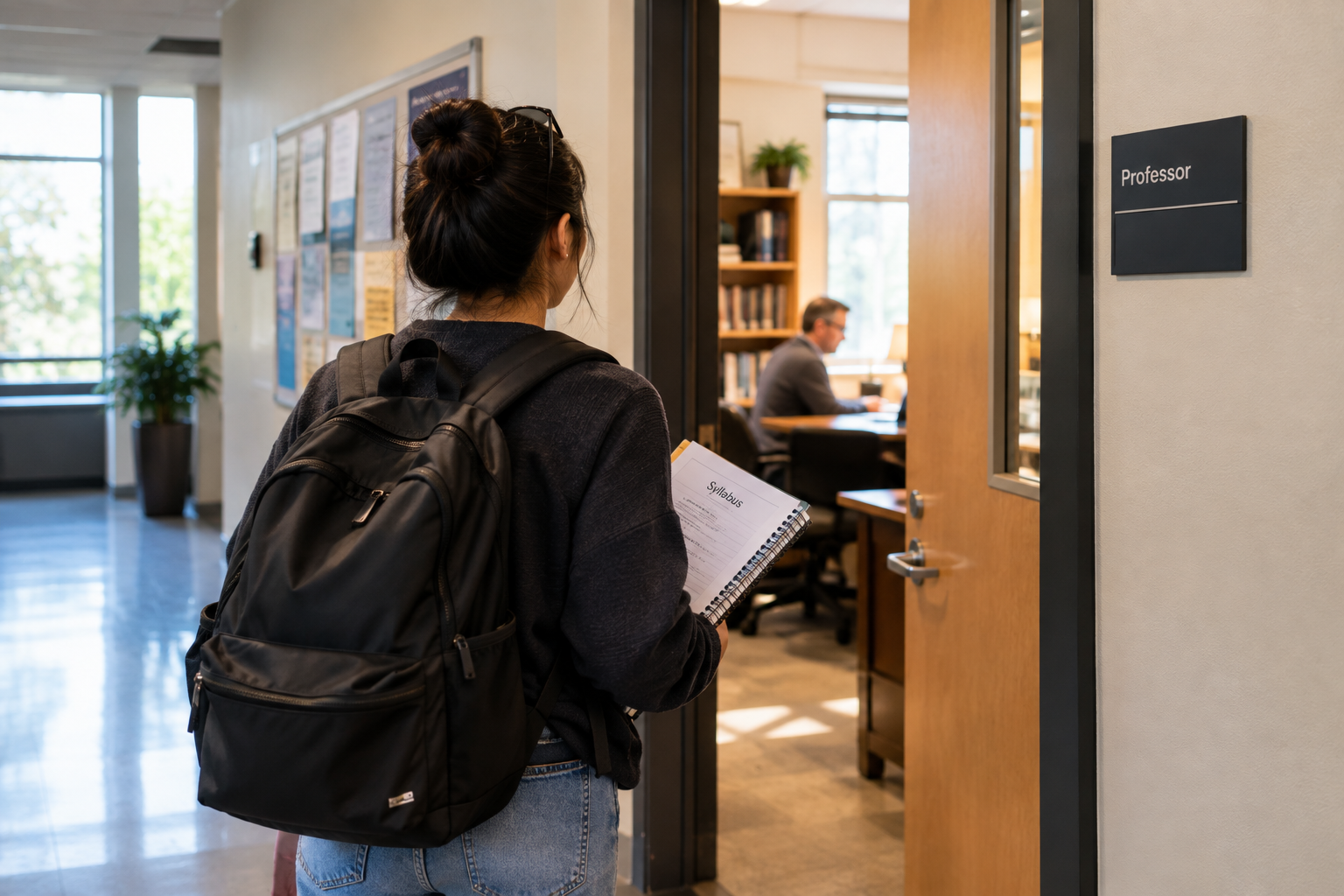
The student could try going to the professor’s office hours, working with tutors, studying in groups, or meeting with an academic adviser. It would be beneficial to use university services regarding language and academic writing in case these aspects were the cause of failing a class.
Having a reasonable study schedule makes a big difference. Instead of studying only during preparation for examinations, the child could break the material down into parts and study on a regular basis.
Measurable goals would be useful too. For instance, completing assignments several days before the deadline, attending all classes, or spending a certain number of hours weekly on studying problematic subjects. The main idea is to use the class as a lesson.
Support Your Child Without Adding Pressure
Obviously, every parent wishes well for their child, yet the wrong way to show it may exacerbate the situation. Avoid reacting with aggression, reproach, and comparison with other students. Informing your child about how other people perform is hardly going to resolve the issue.
On the contrary, share your disappointment and stress personal accountability. It should be clear to your child that getting a bad grade has some consequences; however, it will neither affect their cognitive potential nor their entire life.
As your child is abroad for studies, they should learn how to cope with such difficulties independently as well. Offer your advice, encouragement, and moral support; do not try to make all decisions for your child. A good strategy would be to say: “What do you think needs to change next semester?”
Conclusion: Turn an Academic Setback Into a Recovery Plan
When your child fails a particular course while studying abroad, of course, you will be concerned. But the best thing to do in this situation is to put your worry aside and focus on formulating a plan.
The first step here would be to talk to your child and find out why the course was not completed successfully. After that, evaluate the academic implications, such as GPA, course requirements, graduation plans, academic status, financial assistance, etc. In addition to that, for international students, it is necessary to assess how it influences their student or immigration requirements.
Now, when you have evaluated the situation thoroughly, discuss with your child the strategy of overcoming this academic problem through retaking the course, improving study techniques, asking for academic help, resolving the root of the problem, etc.
And most importantly, keep in mind that what to do if your child fails a class abroad implies not just getting rid of a failure. What you should help your child do is react to this problem wisely and learn something from it.
Contact Us
Contact us for a free consultation for student or visitor visas. Our immigration experts are ready to assist you.