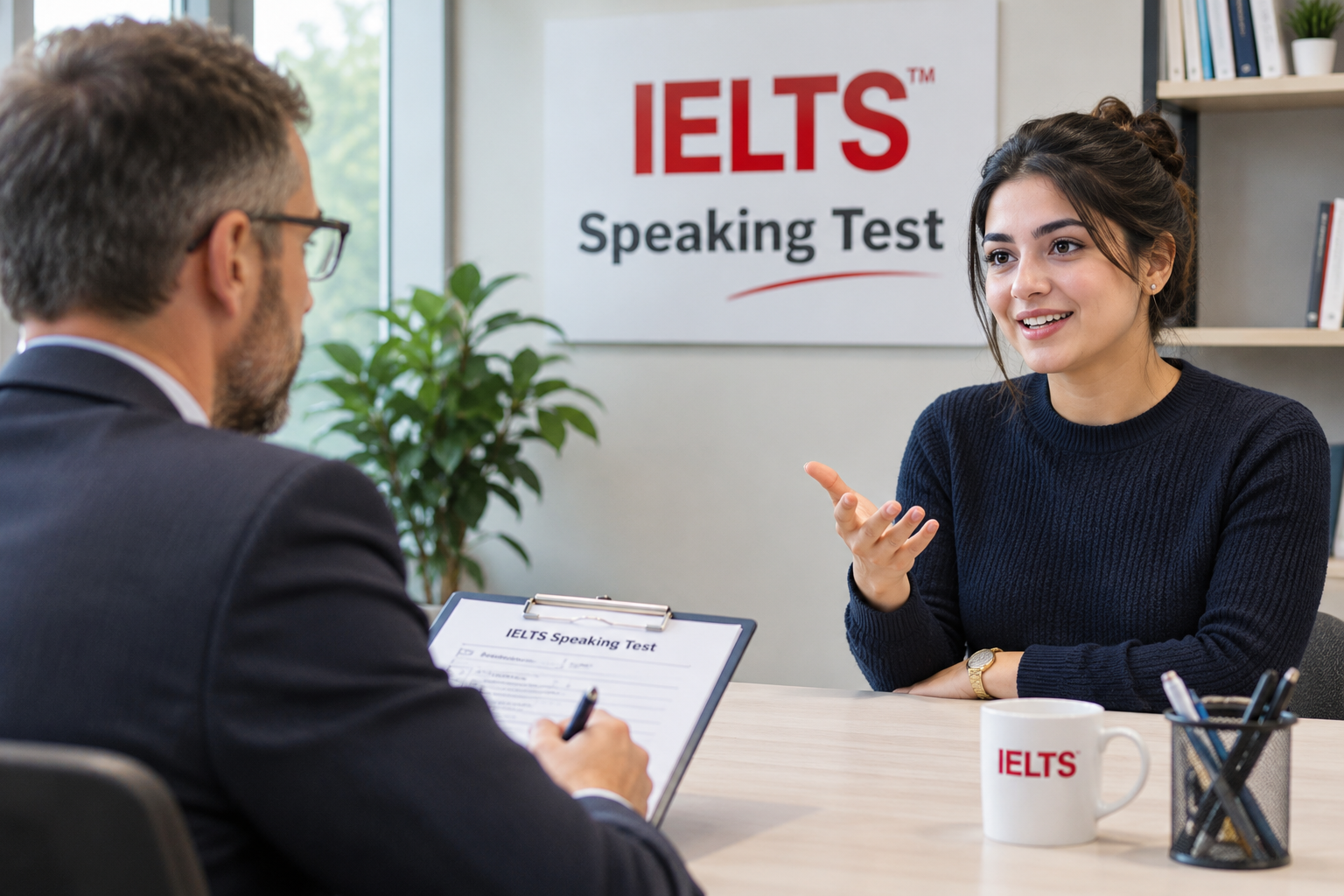
It can be quite difficult to prepare for the IELTS speaking test when you don’t know what types of questions the examiner will ask you. Even if you are fluent in English, it is not easy to answer spontaneously. However, if you work on some common topics, you will be able to think about how to explain your point of view, use different vocabulary, and express yourself with more confidence.
The IELTS speaking test includes various everyday topics, personal experiences, and some social problems. Even though there is no way to know what questions will be asked during the exam, working on common IELTS Speaking topics can help you answer the questions naturally and prepare appropriate answers.
Below you will find 10 common IELTS speaking test topics you should work on before taking the exam, as well as useful preparation tips for each of them.
1. Work and Studies
Work and studies are some of the most common IELTS Speaking topics, especially for Part 1 of the test. Your examiner will ask you questions related to your job, educational background, favorite subjects, career plans, and reasons for choosing a certain major. In order to prepare for this question, reflect on your education, professional life, and goals. Learn how to justify your choices and back them up with relevant details.
Practice tip: Do not give one-word answers. Instead, provide a straightforward answer, give an explanation, and support it with a brief example if necessary.
2. Hometown and Accommodation
When talking about your hometown and accommodation, you should be able to share information about familiar locations and state your preferences. The interviewer may ask about your hometown, what is special about it, and whether you like living in the accommodation you currently live in.
You may be asked to talk about changes that have taken place in your neighborhood, the facilities in it, or recommend some places to visit for guests. Prepare vocabulary related to transport, neighborhoods, parks, shopping, and social life. Practice describing your hometown in comparison to other towns that you have been to.
Practice tip: Use descriptive language to help the examiner understand what the location looks like and why it is important to you.
3. Family and Friends
Family and friendship questions are aimed at revealing your social connections and preferences as well as life experiences. They can concern your habits of hanging out with friends, the qualities you appreciate in other people, and your preference for communicating face-to-face or through the Internet.
You may need to talk about a person who has affected your life or the importance of a certain friendship. Try to choose meaningful experiences that you would feel comfortable talking about. Prepare to describe personality features, shared interests, and social support.
Practice tip: Try to use concrete examples while preparing your answers. The story about an experience sounds more natural than a set of general statements.
4. Hobbies and Leisure Time
Your hobbies are another topic to practice for the IELTS Speaking test. The questions may concern reading, sports, music, cooking, photography, and your hobbies in general. It is likely that the examiner will ask whether your interests have changed with time, what you usually do on the weekends, and the importance of leisure time activities.
Prepare to tell why you like your hobby, how often you do it, and what advantages you get from it. Think about how your hobbies are useful to you for relaxation, developing yourself, and meeting new people.
Tip for practice: Study the vocabulary related to your hobbies rather than studying huge lists of unknown vocabulary which is irrelevant to your interests.
5. Daily Routine and Lifestyle
Your daily routine offers a lot of opportunities to show that you can talk about habits, schedule, and preferences. You may be asked about your morning routine, your daily working schedule, activities on the weekends, how you spend time, and ways to organize your time.
You can also face a question that would ask you to make a comparison between your current and previous lifestyle. It is important to know how to use the present simple and appropriate past tense forms when speaking about daily routine and how to make smooth transitions using sequencing expressions: first, afterward, usually, finally, etc.
Tip for practice: Do not hesitate to explain why some habits suit you.
6. Travel and Holidays
Questions related to travel will give you an opportunity to talk about destinations, memorable experiences, and preferences. The examiner may ask you about your last holiday, a place you would like to visit, or whether you prefer traveling alone or in company.
For IELTS Speaking Part 2, you may also be asked to describe a memorable journey or a place you enjoyed visiting. Prepare a couple of real travel experiences that you can modify depending on the question. Concentrate on the destination, activities, companions, and memorable features of the experience.
Tip for practice: Use past-tense verbs correctly and add some details about the journey, the environment, and your personal impressions.
7. Food and Cooking
Food is a familiar topic that can generate questions about favorite dishes, traditional food, eating habits, and cooking preferences. You may be asked whether you like cooking, how your eating habits have changed, or which meal you would suggest to a visitor.
Prepare vocabulary related to flavor, ingredients, cooking techniques, and eating experiences. You should also practice comparing home-cooked food and restaurant food.
Tip for practice: Do not repeat common adjectives such as delicious. Adjectives such as spicy, healthy, freshly made, and tasty will help to convey your idea accurately within appropriate contexts.
8. Technology and Social Media
Technology makes an excellent IELTS Speaking topic since it links ordinary daily experience with broader social developments. Questions can touch on such topics as smartphones, internet learning, social networking, artificial intelligence, and digital communication.
Sometimes you may have to discuss how technology has affected your life, whether or not social media unites people, or what bad effects too much screen time has on people. Discuss both positive and negative sides of the issues. For instance, technology makes communication quicker, but at the same time, notifications distract people from their priorities.
Tip for practice: Provide reasons and realistic examples that will support your opinion. Use linking words such as however, for instance, and as a result in order to connect your thoughts logically.
9. Education and Learning Experiences
Questions related to education will concern your favorite subjects, impressive teachers, necessary skills, as well as your preferred educational environment. In addition, sometimes you will be asked about traditional teaching vs. internet education.
Get ready to talk about what helps you learn, your areas of interest, and how education can impact your future. Think of an actual event where you had to learn something new or understand a complicated idea. It will be helpful to describe what took place and what lessons you learned during that process.
Tips for practice: Try formulating your opinion about education in simple words instead of using complex vocabulary. A good explanation and grammatically correct language are always more important.
10. Environment and Social Problems of Everyday Life
These topics raise more general questions related to expressing your opinions, analyzing problems, and suggesting possible solutions. Popular topics include pollution, recycling, public transportation, climate change, and preserving natural parks.
The questions may be about what you think people should do to protect the environment or reduce waste production. For longer discussions, you may need to think about the role of the government and companies. Prepare relevant vocabulary about environmental protection, renewable sources of energy, raising awareness, and sustainable living. Practice explaining the reason for a problem and ways to solve it.
Practice advice: Structure your response around an opinion, reason, and example. This strategy will help you generate ideas but keep them focused.
Effective IELTS Speaking Practice Strategy
Just knowing popular IELTS Speaking questions is not enough – you should be able to state your ideas and reply coherently without resorting to memorized scripts. Use the following methods to make your practice effective:
Practice all sections of the test: Get ready for easy personal questions in Section 1, for the individual long turn in Section 2, and for more complicated discussion questions in Section 3.
Listen to yourself: Look out for repetitions, poor pronunciation, grammar mistakes, and unnecessary pauses.
Learn words and expressions on various topics: It’s important to know helpful words related to your job, education, travel, technology, etc.
Answer naturally: State your opinion, provide your reasoning, and give an example if needed.
Speak out loud: Continuous practice will make it easier for you to generate sentences without translating into your native language.
Correct your mistakes: Find your regular mistakes and correct them before starting another topic practice session.
Conclusion
Practicing 10 popular IELTS Speaking test topics will be helpful in preparing for a variety of questions and in gaining comfort in expressing yourself in English. Topics such as work and education, hometown, interests, traveling, technology, and environmental issues can be useful for preparation.
But it is important to understand that success is not in memorizing the answers to all possible questions. It is necessary to develop the vocabulary related to the topics, organize thoughts, and speak naturally about something familiar.
It is recommended to devote some time each day to practicing different topics and recording your answers. In this way, with consistent preparation, you will be able to demonstrate your English-speaking skills better in the IELTS Speaking test.
Contact Us
Contact us for a free consultation for student or visitor visas. Our immigration experts are ready to assist you.