Introduction: Importance of Credit for International Students
Becoming an international student in North America is one of the biggest steps towards your bright future. Nevertheless, from a financial perspective, everything starts from scratch. Even though you were a responsible person who managed money well in your homeland, your credit history is not recognized in the US or Canada. It means that banks, landlords, and even potential employers cannot evaluate your financial reliability. A credit score becomes an identification factor that influences your chances of renting a flat, obtaining a loan, and accessing other financial opportunities.
Fortunately, it is a straightforward task for an international student when you know how to build credit. With certain efforts, you will be able to create your credit history in a matter of time. The article below provides practical tips on how to build credit for international students from scratch.
How Does the Credit System Work?
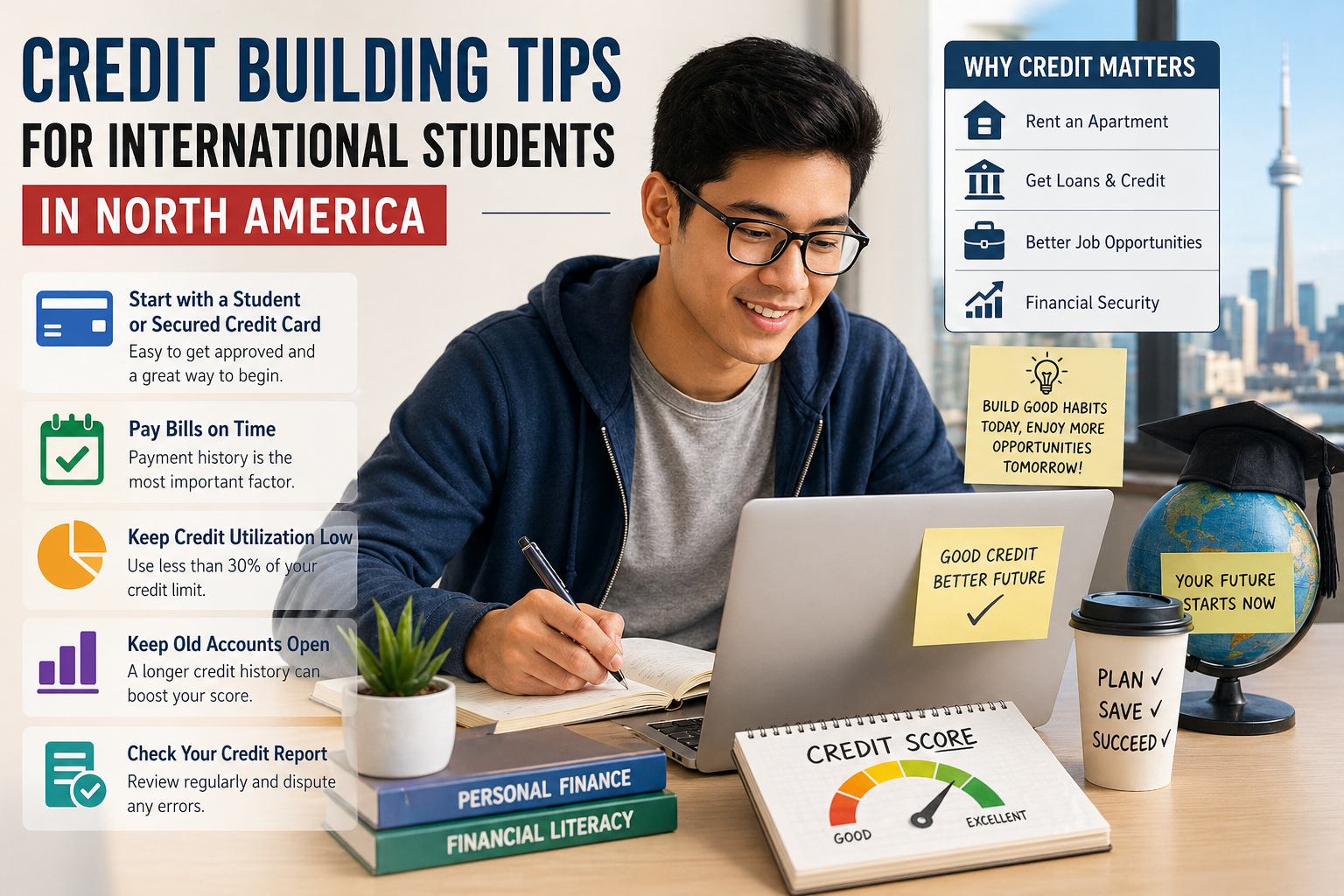
Before you go about creating your credit rating, it is vital to know how the credit system works. Your credit score will depend on different things, such as your payment history, amount of credit utilization, duration of credit history, types of credit, and number of new credit applications. Of all these variables, your payment history is the heaviest factor, and therefore, making your payments on time is one of the crucial things you should focus on.
Unlike local students, international students usually come to Canada without any credit history, as North American credit bureaus do not take into account financial information from other nations. Thus, it will be up to you to establish a good credit rating from scratch. This task might appear difficult, but you will be able to do it successfully by establishing a positive record without any past mistakes.
How to Build Credit from Scratch
The best way to start building a credit history would be by getting access to a credit product. A great way to achieve this is through obtaining a secured credit card. With a secured credit card, one deposits some funds in their account that will act as their credit limit. Since the bank does not take much risk in such cases, it is easy to get approved for the application process. In this way, one starts building up their credit history right away.
Another means of beginning a credit history would be through obtaining a student credit card. There are many banks in North America that offer credit cards specifically meant for students. It is important to note that most of these credit cards require less paperwork since they do not need a credit history.
Alternatively, you may want to think about signing up for authorization use with another individual’s credit card. In other words, you will be added to your close associate’s account, enabling their good record of payments to help boost your credit score. However, you have to proceed with care because any missteps will affect your credit rating as well.
Smart Credit Habits You Must Follow
Getting credit does not depend solely on having a credit card; what really matters here is the proper use of such a card. First of all, one must always pay their bills on schedule. Just one missed payment can affect one’s credit rating negatively, and it will remain in one’s credit history for several years. One can easily overcome this problem by signing up for auto payments.
The other significant point to remember is that one should try to minimize credit utilization. This implies that one uses their credit capacity not more than 30% per time, although using even smaller amounts would mean even better results. As a rule, professionals advise that credit utilization should be kept under 30%, although using just 10% can do wonders. In case of having a credit limit of 1000 dollars, one should not spend more than 300 dollars. (Source)
It is equally vital to maintain regular usage of your credit cards, although responsibly. Make sure not to make the mistake of avoiding usage of your card altogether, since this does not assist in improving your credit score. Rather, use your card for small transactions, such as purchasing grocery items or subscribing to any particular item, while making payments against your entire bill at the end of the month.
Other Methods to Build Your Credit History
Apart from credit cards, there are other ways of building your credit, and most international students do not consider them. For example, rent reporting companies can help you improve your credit by tracking your regular payments. As your rent is the major expenditure every month, reporting the payments will significantly contribute to your credit history in the long run.
Credit builder loans are another way to build your credit history when you have no previous credit record. With such loans, you pay a small amount of money regularly, and the total amount is released to you at the end of the loan period. This demonstrates your ability to manage finances and pay regularly, and helps you build up your credit history.
Utility payments can be reported to credit bureaus by certain providers, including mobile and electricity bills. You can also use your phone bills as part of the payment reporting process.
Mistakes to Avoid Making
Though earning credit can be pretty simple, there are a few mistakes people often make that will hold them back. One such mistake is failing to make payments on time, which will negatively impact your payment record. In addition, making payments close to your credit card limit or spending all your credit could raise red flags for creditors.
Dependence on a debit card can also affect your ability to build credit since your debit card does not have any effect on your credit record. Early closure of your old accounts might also pose a problem since having an old credit account can actually help boost your score.
How Long It Takes to Build a Good Credit Score
Developing an impressive credit score requires time; however, it can be predicted how long it will take for most students to do so. Most of them can be able to get their first credit score in three to six months of opening and responsibly managing their credit accounts. After six to twelve months, it is possible for one to get a fair to good credit score.
The period taken might vary from individual to individual due to various behaviors; however, being consistent throughout makes everything easy.
Conclusion: Step-by-step Credit Building for Your Financial Future
As an international student seeking to develop credit in North America, the process may be overwhelming, especially if one has little or no experience. However, all it takes to accomplish this feat is following the proper credit-building strategies from the beginning. This includes using secured credit cards and student credit cards and adopting healthy money management practices. In addition, one should look into other avenues that can be helpful in developing a credit history.
The key point here is that credit building takes time. It cannot be rushed, but the process is quite straightforward. With patience, dedication, and discipline, one can build their credit from scratch successfully. Moreover, such a person will build a foundation of creditworthiness and financial stability for the years to come.
Contact Us
Contact us for a free consultation for student or visitor visas. Our immigration experts are ready to assist you