Around the world, plenty of learners have lately turned their eyes toward Malta. Not only does it host institutions known far and wide, but classes happen in English too. Life there opens doors, especially with travel across Schengen simplified. However, before starting your studies, you must first obtain a student visa.
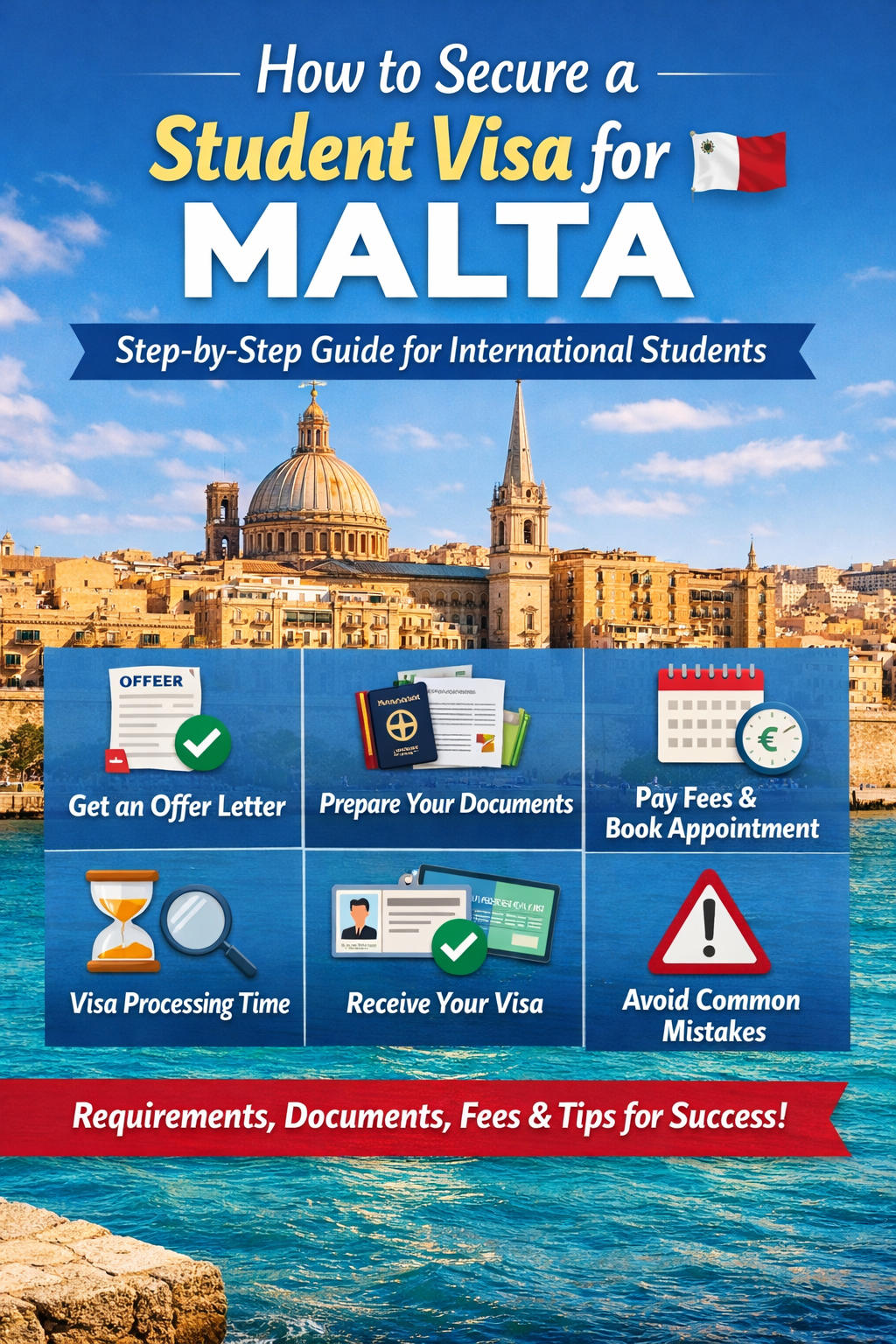
This guide will walk readers through on how to get a student visa for Malta. Requirements come first, followed by the needed paperwork. Timelines show how long things take. Useful hints appear along the way, shared by those who’ve done it before. Each part builds on what came earlier, making the process clearer. Approval odds often rise when details are handled carefully. The full picture unfolds without skipping steps.
Malta Student Visa Explained
Many students overlook visa requirements when planning to study in Malta. Depending on where you’re from, under ninety days might only require a Schengen Type C pass. Courses stretching beyond three months call for a National Type D entry visa first. Once on the island, securing a residence permit becomes necessary, and the length of stay shapes which path fits best.
Before heading to Malta, those outside the EU need to sort out a student visa ahead of time. Meanwhile, citizens from EU countries are free to begin studying there straight away, though staying longer means signing up with local authorities afterward.
Getting an Admission Letter From an Approved Institution
The first step is obtaining an admission letter from a recognized institution in Malta. It may come from a university, a smaller college, even a language program or trade institute; if it carries local accreditation, it counts. Starting here shapes everything else that follows.
Right from the beginning, make sure your acceptance letter spells out the program name, how long it lasts, plus when classes begin. Proof you’re truly enrolled? That’s what this paper shows visa officers look for first. Picking a school with proper accreditation tends to help, too, often making the visa process smoother down the line.
Preparing the Required Documents
A single paper out of place might slow everything down when applying for a student visa to Malta. Mistakes or missing pages could mean the request gets turned away.
A passport that’s still well within its expiry period must be ready, along with fresh photos matching Schengen size rules include past visa copies when relevant. Starting strong means having school records on hand: things like grade reports, diplomas, plus results from tests such as IELTS or TOEFL to back up your education history.
Showing you have enough money matters documents like bank records, support notes from sponsors, or award papers for grants help prove it. A place to live needs confirming, too, through a signed lease, student housing receipt, or written invite from someone taking you in. Health coverage must stretch across all days abroad, including time spent elsewhere in the Schengen zone. Insurance meeting those terms isn’t optional; it’s required.
Paying Tuition Fees and Obtaining Payment Proof
Paying some of your school costs upfront might be needed before getting official acceptance papers. Often, that proof of payment goes straight into your visa paperwork. Showing you’ve sent money already can make your case stronger when applying for a student visa to Malta.
Filling Out the Malta Student Visa Application Form
After getting your papers together, fill out the student visa form for Malta. You’ll find that paperwork at a Maltese embassy, consulate, or visa center nearby. Whatever you write needs to line up exactly with what’s on your records. Tiny errors might slow things down, worst case, create problems later.
Scheduling and Attending Your Visa Appointment
Once the form is done, head to the website of the Maltese Embassy or find the closest Visa Application Center to secure your appointment. Slots fill up fast, which means getting one sooner rather than later works better.
Ahead of everything, hand in your paperwork when you meet. Biometrics come next, fingerprints, photo, that sort of thing. Questions might pop up later, ones about where you plan to study, how money is sorted, or what comes after school wraps up.
Submitting Documents and Paying Visa Fees
When you arrive for your meeting, hand in every required paper along with the visa cost. Usually, that student visa runs close to 100 euros, though extra handling fees might apply based on where you file.
Ensure all documents are organized and complete before submission. Keep every page in order, marked without confusion. Tidy files tend to stand out, simply because they show care was taken, avoiding mix-ups before they start.
Waiting for Visa Processing and Tracking Your Application
Once sent, officials in Malta start looking at your request. Four to eight weeks is typical, though it might take longer if you’re applying from certain places or during busy seasons. Check on your application using the embassy site or the Visa Application Center online. When they ask for more papers, getting those sent fast helps stop holdups.
Once approved, the visa will be stamped in your passport. Right after that, look closely at the dates it has to match how long you’re allowed to stay. The kind of visa matters just as much, so double-check what’s printed. Mistakes can hide in small details, which is why a slow review works best.
Getting ready to go? Lock down your ticket first. Your place to stay needs a confirmation check. Money matters are next; map those out early. Touching down in Malta ahead of class gives breathing room. One week works. Two might be better. Settling takes time. Orientation fits easier when you’re not rushed.
Once your studies stretch beyond ninety days, getting a residence permit becomes necessary upon reaching Malta. Arrival there means stepping into the process through Identity Malta registration. Proof of where you live comes next, followed by papers showing financial stability. Other documents also form part of what needs to be handed in.
A stay visa often lasts twelve months, then gets extended each year you’re enrolled in classes. Renewals continue while school does.
Why Malta Student Visas Get Denied and What to Watch Out For
One reason student visas get turned down? Not showing enough funds. Missing paperwork shows up a lot, too. Plans for studying that lack detail raise questions. Officials might wonder if you’ll actually go back once finished. Uncertainty around your future movements causes problems.
Starting fresh matters when every paper must be real. A powerful reason for applying opens doors more than expected. Goals in study and work need sharp clarity, nothing vague. Backing it up with proof you’ll return home adds weight without saying too much.
Tips for a Successful Malta Student Visa Application
Three months ahead of your class start date, begin filling out forms. Every paper you submit should be correct and filled; check it twice. Your reason for studying needs to sound real, not rehearsed. Stay in touch, always, with both the school and the visa office.
Getting started ahead of time, while keeping track of each step, makes success more likely when applying for a Maltese student visa. A clear plan helps avoid delays that could slow things down later on.
Conclusion
Starting your student visa path for Malta might feel overwhelming at first glance. Yet doing things one piece at a time smooths out the rough edges. Once you have that acceptance note in hand, momentum builds naturally. Moving forward means ticking off each requirement without rushing ahead. After landing, signing up locally becomes the next quiet milestone. Following each step carefully helps ensure a smooth visa application process.
A sunny island in the Mediterranean, Malta gives students strong schools and global connections because it draws people from many countries. When plans are clear, when documents are ready, stepping into European classrooms feels steady, sure, since support systems exist for newcomers who arrive to study.
Contact Us
Contact us for a free consultation for student or visitor visas. Our immigration experts are ready to assist you.