Introduction
The choice of the country where your kids are supposed to be raised plays a major role in shaping their future lives. Nowadays, many families opt for Malta as it provides them with excellent academic prospects, an English-speaking environment, and a secure atmosphere. In addition, the education in Malta combines the best European standards and a multinational environment, which makes it appealing both to locals and expats.
Nevertheless, apart from education, safety is one of the key priorities of any parent when thinking about a particular country to live in and educate their children. This guidebook covers all the necessary information, including how educational institutions function in Malta and how safety is ensured there.
Malta Education System Structure
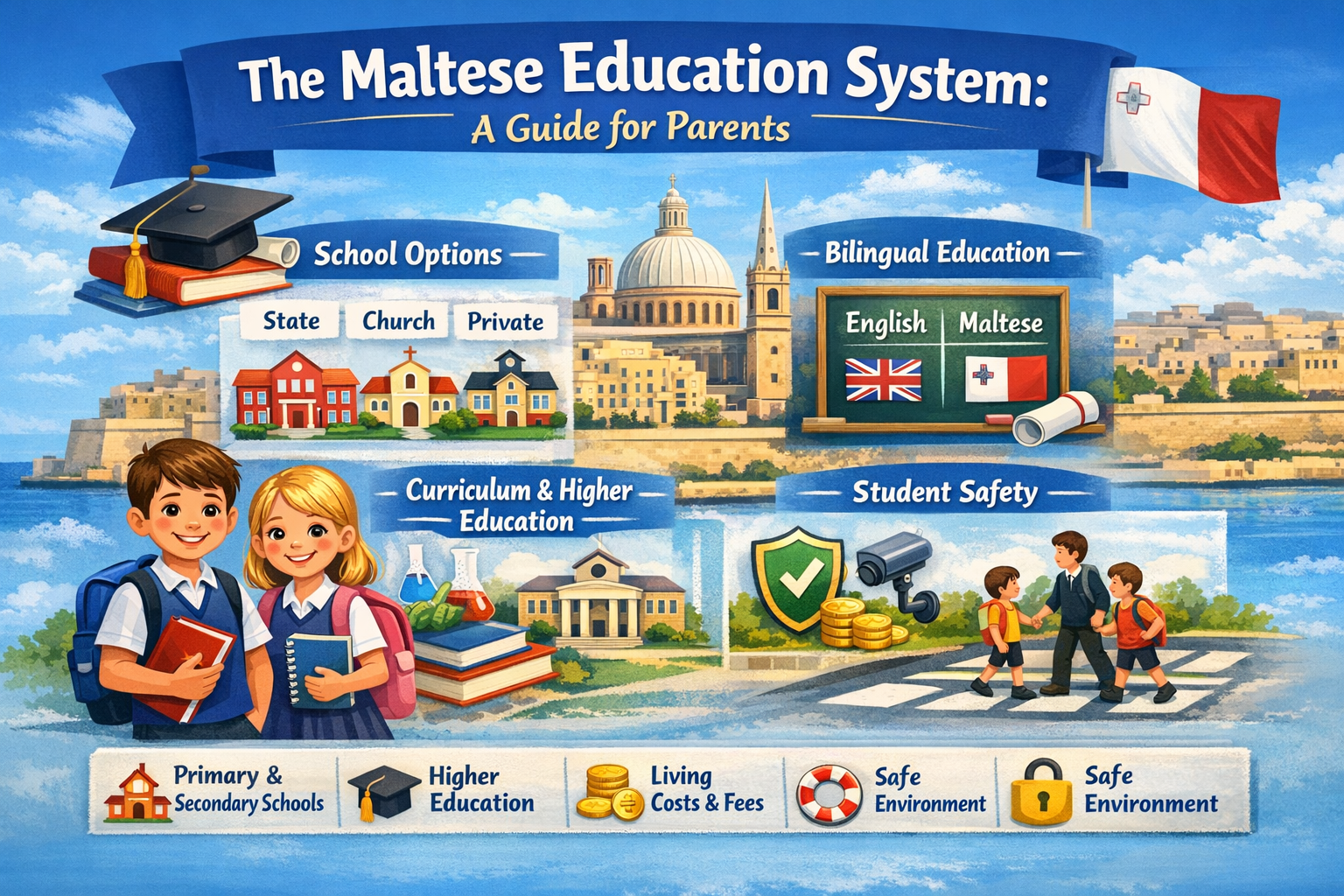
The Maltese Education System is quite structured and mandatory for all children aged from five to sixteen. The structure is centralized under the Ministry for Education. This education system includes three levels of schooling: primary education, secondary education, and post-secondary education.
As for the duration of primary education, it lasts for six years and continues with secondary education. Moreover, there are many opportunities for education at the level of higher education in Malta. In particular, Malta has universities and other institutions where vocational education is provided. Bilingualism is one of the key attributes of education in this country because classes are conducted in two languages, English and Maltese.
Recently, Malta has implemented several measures to improve the quality of education in the country, such as the introduction of new curriculum strategies and early interventions to help poor performers succeed.
Different Types of Schools in Malta
As you investigate different school options in Malta, the following three are what you should consider: state schools, church schools, and independent/private schools. The government funds state schools and has no tuition fees for any child from the country’s populace.
Church schools receive funding partly from the government, and they usually teach their students according to religious teachings. They are very popular. Private or independent schools include the teaching of international curricula in a limited number of classes. These schools have some costs that learners must pay to cover.
Around 30% of children in the country attend either church or private schools. There are different advantages for the schools under discussion, with inclusivity and diversity being those of state schools, and individualization being the key feature of private schools.
Curriculum and Academic Streams
Malta’s education system is governed by a national curriculum that puts emphasis on core disciplines, including math, sciences, language arts, and social studies. Students are evaluated using coursework and examination scores; however, recent changes to the education system have worked toward reducing the burden exams put on students.
At the secondary school level, there is room for both academic and vocational streams. The role of vocational training has become more prominent in Malta, with students choosing vocations in engineering, health care, ICT, and more, thereby ensuring greater compatibility with the job market.
There are international schools in Malta that follow foreign curricula such as the British and International Baccalaureate (IB).
Medium of Instruction and Multilingual Benefit
One of the greatest benefits that the Maltese education system offers is the fact that it is bilingual. The language of English is extensively used as the medium of instruction, especially in teaching academic subjects, whereas the language of Maltese is used as the national language.
The bilingual nature of the education system gives learners an advantage when competing globally. Students who come from other countries find it easy to fit into the educational institutions of Malta since English is extensively used.
Enrollment Process for International Students
When it comes to foreign families settling in Malta, the enrollment process is fairly easy but does require some preparation. Parents have to present various important documents, including school transcripts and identification cards. In certain cases, a student assessment or interview may be necessary.
Also, international students from outside the EU may need to apply for special permits or visas. It would be very wise to register early, particularly for those looking to attend private and church schools.
Students’ Safety in Malta: What Parents Should Be Aware of
One of the main worries for parents is children’s safety in Malta, and the country does quite well in terms of this concern. In general, Malta is considered a very safe place with low levels of crime, especially in regions that house schools.
There are many steps taken by the schools themselves to ensure the safety of their students. These include supervising the children, controlling campus access, and introducing anti-bullying programs. At the governmental level, there are initiatives like the Safe School Programme that cover child protection, anti-bullying, and parental information projects.
What is more, there is an emphasis placed on digital security. Students are not allowed to use smartphones, and schools cooperate with governmental campaigns that inform children of online dangers.
It should be mentioned that sometimes there are cases of disciplinary problems within the school system in Malta, but generally speaking, the government does its best to keep the students safe.
The School Environment and Pupil Welfare
In addition to academic excellence and security, the school environment is an important element in the growth of a child. The schools in Malta emphasize holistic learning, which includes extracurricular activities such as sports, art, and culture.
The class sizes in Malta schools are generally small, giving teacher’s time to pay attention to their pupils individually. Additionally, most schools in Malta have counseling services and other learning support initiatives, especially for pupils with special learning needs.
Despite this, the Maltese education system, like any other, has problems such as inequity and differing levels of performance among various schools.
Education and Living Costs in Malta
Education expenses in Malta differ according to the institution. State schools are free of tuition, whereas private institutions will require a fee that varies. Other expenses include uniforms, books, transport, and additional activities.
Living expenses in Malta are moderately high when compared to other countries within Europe. It is crucial to budget well before traveling to ensure that you enjoy your stay in Malta.
Transport and Safety During Commuting
Transport is yet another important area when it comes to the safety of students in Malta. The country has an efficient public transport system. Most of the schools in the country provide transport facilities for their students.
The accommodation chosen by the parents must be located close to the school so as to ensure commuting becomes convenient and safe for the students.
Integration and Lifestyle
One aspect that sets Malta apart from other countries is the welcoming nature of its culture. It is also family-oriented, thus easing the adjustment process for international students.
The multicultural society and English-speaking setting of the country make integration at school and within the community smoother. In addition, students will experience learning alongside a Mediterranean way of life, which is one of the main attractions of studying in Malta.
Practical Advice for Parents
It is important to prepare your child for this move in both academic and emotional terms. Familiarizing your child with the new school and meeting teachers will make all the difference.
Involving yourself in your child’s educational process, keeping track of their development, and communicating with educators will be critical. Establishing ties with other families will facilitate the adaptation process when you relocate to Malta.
Conclusion
The Maltese Education System provides a perfect combination of high-quality education, a multilingual experience, and safety for all students. With a wide range of education programs and a high level of safety in Maltese schools, this country can be called an ideal place for your child’s future success.
Although some issues persist in the education sector in Malta, this does not prevent the country from striving towards improvement and progress. If you are concerned about your child’s education and well-being, schools in Malta deserve your consideration.
Understanding the system and making well-informed decisions is the key to success.
Contact Us
Contact us for a free consultation for student or visitor visas. Our immigration experts are ready to assist you.