Going to Europe to study provides Southeast Asian students with chances of experiencing new learning opportunities, meeting various cultures, and becoming more independent. However, traveling abroad implies facing new social habits, expectations in classrooms, and daily routines. Things that worked well in your native country can have different rules in another European state.
These peculiarities are noticed by international students already after the first few days spent in a foreign country. Communication in class, with friends, or in a store is an opportunity to face some unexpected things. All these things happen because adaptation to a new environment is needed.
Knowledge of the most significant culture shocks faced by Southeast Asian students in Europe can facilitate their adjustment process significantly. Of course, all experiences vary among different countries and different people; however, there are three aspects worth paying special attention to.
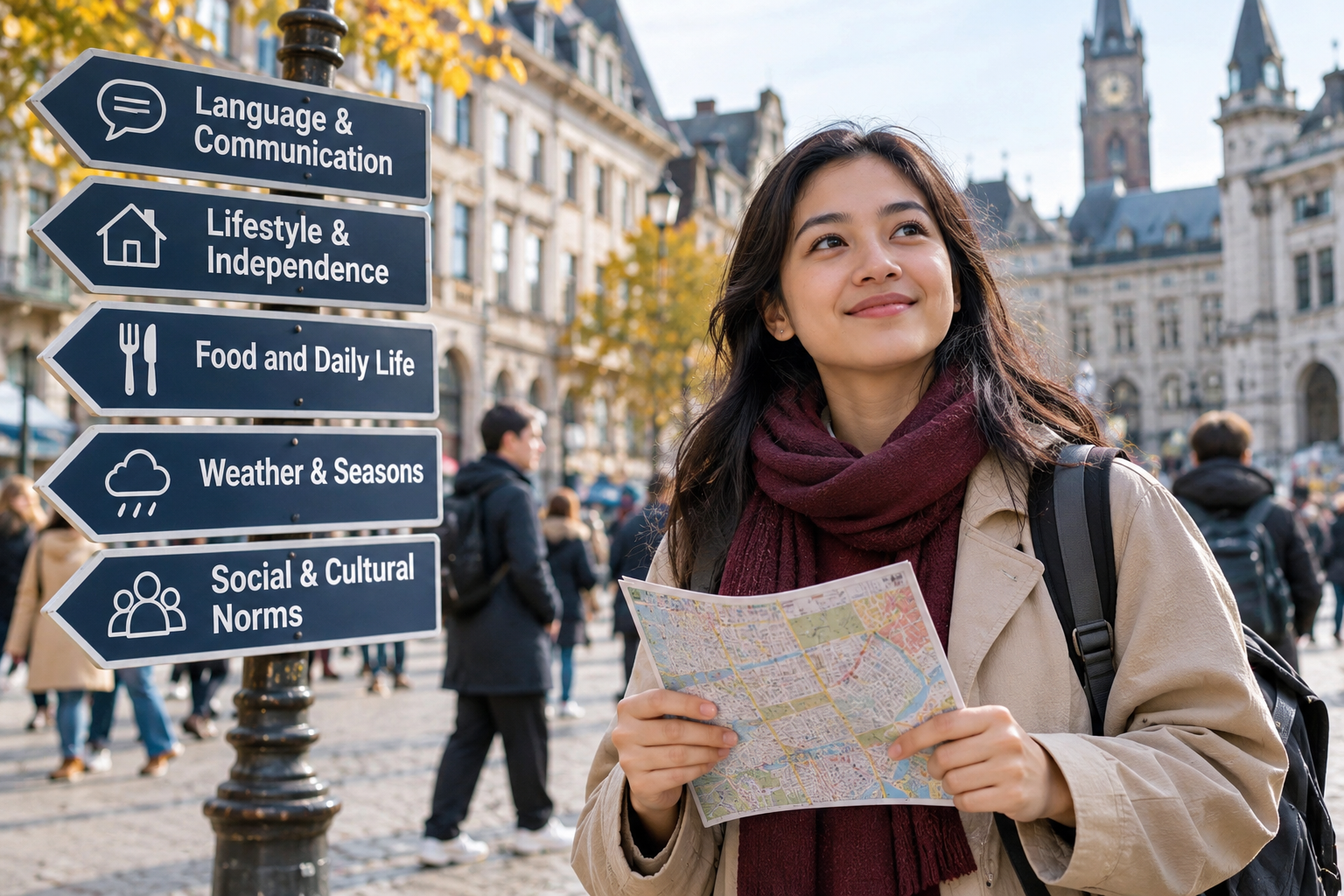
1. Direct Communication and Different Social Norms
One of the cultural differences Southeast Asian students may observe while studying in Europe involves communication expectations regarding such aspects as politeness, disagreement, personal boundaries, and other social norms.
Adjusting to More Direct Communication
When dealing with some Southeast Asian cultures, the idea of communication emphasizes harmony maintenance, respect, and avoidance of conflict wherever possible. Students might be used to voicing their disagreements in a subtle manner, especially when talking to teachers, senior colleagues, or strangers.
Within some European societies, people tend to be rather direct in communication; for example, one may freely share their point of view in a discussion, give some feedback directly, or even ask some questions in an abrupt way. Such behavior does not mean rudeness but another perception of what a correct conversation looks like.
Such a communication style can make international students feel somewhat awkward. At the same time, some European students might perceive indirect comments in the wrong way, too. It is important for students to become aware of such cultural differences to avoid misunderstandings in their interactions with other students and teachers.
Understanding Personal Boundaries
Social norms may also be different when introducing oneself to someone new. Different European countries have different social norms for greeting someone, maintaining personal space, physical contact, as well as attitudes towards the subject of privacy.
Some individuals may find it easy to talk about their opinion but not want to talk about family issues. Some people use certain physical actions when greeting their friends that are not understandable to international students.
What to do: Watch how people interact, ask questions if you are confused by something, and never make judgments about one culture over the other.
2. Unfamiliar Academic Expectations and Classroom Participation
Another big culture shock for Southeast Asian students who come to study in Europe is related to the education system. Even academically successful students have to adjust to different teaching approaches, assessment standards, and expectations for independent learning.
Becoming an Independent Learner
Sometimes students come from schools where teachers give thorough instructions, explain course content in detail, and lead students through all activities. Some European universities expect students to be more responsible for their own education.
This means that students have to read academic papers on their own, prepare for seminars, deal with several deadlines, and find additional sources without being provided with detailed instructions. The amount of work might seem huge for students, especially when they are trying to adapt to the new language, surroundings, and new administrative procedures.
In order to cope with expectations, students have to analyze the outline of the course early, make a realistic schedule, and divide large assignments into small parts. University libraries, academic support services, and writing centers can assist students with independent learning skills development.
Speaking Up and Challenging Ideas
Class participation might also be a potential difficulty for international students. At some European universities, students are expected to challenge arguments, add their own interpretations, and raise concerns about ideas put forward by lecturers or fellow students.
If students are used to demonstrating respect through silence, then disagreeing with the teacher might seem difficult. They might fear that questioning will make them look ill-prepared or disrespectful. Nevertheless, debate in the academic context usually implies analyzing evidence and developing critical skills. Students do not have to oppose each argument, but they have to be able to ask questions and provide justification for them.
Academic honesty is another issue that should be mentioned. It is crucial for students to know all the rules related to citations, plagiarism, and collaboration because they can vary from university to university.
How to adapt: Read materials beforehand, prepare questions, and practice providing opinions with evidence. If there are any unclear points in assessment guidelines, ask your lecturer or teaching assistant.
3. Different Daily Lifestyles, Social Relationships, and Independence
Culture shock does not only relate to classroom and communication aspects. Sometimes, the very lifestyle of Southeast Asian students coming to Europe will need to change.
Adapting to Food and Weather
Food might be one of the first things that make people homesick since students might miss certain dishes, products, spices, and food habits. Even if there are some international stores with foods from different cultures in some cities, the accessibility of such foodstuffs might differ significantly, not to mention prices.
Cooking at home allows getting accustomed to some familiar dishes as well as saving money. The climate can become another obstacle. Students coming to Europe from tropical South-Eastern Asia to parts of Northern or Central Europe can find their studies affected by the winter, fewer hours of daylight, and significant changes in climate.
These factors influence clothing, commute routines, and activities. Students will need to have appropriate clothes and understand how the public transportation system functions here.
Building Friendships and Managing Independent Life
Studying in another country usually means saying goodbye to family and friends that you rely on daily. The students have to start doing everything on their own: cooking, washing clothes, organizing finances, making appointments, taking care of the house.
Making friends will also take some time. Local students will already have established friend circles, whereas international students will most likely be talking only with people from their countries. Meeting familiar people brings comfort and emotional support. At the same time, communicating solely with people with the same background will result in a lack of cultural experience and new acquaintances.
Making friends becomes possible through joining university societies, attending events at university, doing group work with fellow students, and discovering common interests.
Adjustment tips: Learn to handle your life independently either before or soon after arriving in the country. Make a reasonable budget, become familiar with the basic services, and make an effort to get acquainted with new people. Preserving one’s culture and trying something new is a great strategy to feel comfortable.
Practical Ways to Overcome Culture Shock in Europe
Moving into a new country will definitely take some time. Instead of waiting to be comfortable from day one, Southeast Asian students should see adapting to a new culture as a gradual process of education. Prior to moving, conduct research on social norms in the new country, as well as on the expectations of its universities and cost of living. After arrival, observe how people interact and behave in certain situations.
Additionally, don’t be afraid to ask for assistance wherever it is needed. There are many options available at international students’ offices, academic counselling, student associations, and the university’s counselling service. While being in touch with parents is comforting, spending time experiencing new things is equally important.
Above all, refrain from comparing each new thing with one’s home country culture. Cultural differences provide new perspectives, nothing more.
Conclusion
There are three main culture shocks that occur among Southeast Asian students in Europe, including direct communication, academic expectations, and changes in day-to-day life. These aspects can become problematic for a student when one is trying to cope with education, personal finance management, and separation from home at the same time.
Nevertheless, it is not impossible to have a good time while learning abroad if a student knows how to learn about local traditions of communication, develop individual study skills, and establish friendships within a new cultural environment.
Each student is unique, and every culture differs greatly between Europe and Southeast Asia. Being patient and interested in differences will facilitate the adaptation process. Finally, it should be noted that education in Europe is not just about academic success and getting a diploma.
Contact Us
Contact us for a free consultation for student or visitor visas. Our immigration experts are ready to assist you.