Planning Your Student Life in Malta
Currently, Malta is considered one of the most appealing European countries for international students who want to get a high-quality education in a multicultural country with an English-speaking population. Annually, hundreds of students come to Malta to study in different universities and colleges due to relatively low tuition costs, friendly culture, and good geographical location in Europe. Nevertheless, prior to starting your educational program in Malta, you should learn about the cost of living in Malta for students. Although Malta is a much cheaper place than many other Western European states, living in Malta can cost differently depending on various factors.
As an island country, Malta has some specific features regarding the economy of the country, which affect the cost of some goods and services there. On the other hand, there is relatively cheap public transport, affordable healthcare, and many other aspects that make it easier for students to live in Malta. Depending on whether you choose a public university, language schools, or a private college in Malta, this article will be useful for you.
What Makes Malta a Top Choice for International Students?
Malta remains a favorite destination among international students because of its unique combination of quality education at low costs. The main advantage of Malta is that English is an official language there. This means that students coming from various countries will easily fit into the new environment in terms of communication and studies. Moreover, Malta has gained popularity among international students due to its educational institutions, which have built up their reputation in the field.
Apart from high-quality education and communication, Malta has something else that attracts students. It offers a special lifestyle which includes Mediterranean culture and beautiful coastal lines. Students can enjoy the sunny weather of Malta all year long, visit historical landmarks, and travel across Europe. In contrast to countries like the UK, Ireland, and Australia, the cost of living in Malta remains relatively low.
Understanding the Overall Cost of Living in Malta
The general expense level of living in Malta depends greatly on personal preferences. The average monthly spending of an international student is estimated to be between €800 and €1,400 without accounting for the tuition. For students who opt to live in shared accommodation, cook their food, and keep track of their finances, the expense level is likely to be lower. However, those who choose to live alone and indulge themselves in social life might face greater monthly expenses.
There are several factors that determine the student budget in Malta. The list includes location, traveling routines, entertainment, and utility usage. Sliema and St. Julian’s are the locations where it is more expensive to live because of the large number of foreigners. At the same time, Msida, Birkirkara, and Gozo offer relatively cheap living conditions.
Accommodation Costs: Your Biggest Monthly Expense
Accommodation forms the most significant part of the cost of living in Malta for students. The majority of international students usually prefer to rent shared apartments due to the fact that they are quite affordable yet comfortable. The cost of such type of accommodation may vary from €450 to €700 per month, depending on the place and the number of your roommates. Living with other people will help you save on utilities and give you the chance to communicate and make new friends.
However, in case you want more privacy, you may decide to rent private apartments or studios. Such a type of accommodation may cost you from €800 up to €1,600 per month, especially when considering the most attractive places in Malta. Moreover, university accommodation and student houses may also be another option for students. It is important to pay attention to utilities and security deposits before signing any contract.
Food and Grocery Expenses
Food costs are still quite reasonable for students who organize their budget properly. On average, students have to pay from €180 to €300 a month to buy food. There are many supermarkets, local markets, and shops where students can buy food and other necessities in Malta.
Making your own food at home is probably the best solution to help you cut down on expenses when living in Malta. People who eat at home will save a lot more money than those who prefer to have dinner in restaurants or cafes. An average price for having a meal in a restaurant usually starts from €15 to €25 per person. The cost of eating fast food in Malta ranges from €5 to €10 per person.
Transportation Costs Around Malta
The cost of transportation in Malta is considerably lower than that in many other European nations. There are no railways in Malta, and hence, the main mode of transportation available is by public bus. As international students get access to travel schemes offering reduced costs, they are able to travel all around the island without much expense. Depending on usage patterns, transportation expenses typically range from €0 to €30 per month.
Apart from the public buses, students may sometimes use ride-sharing apps like Uber, Bolt, and eCabs. Taxis are available too, and hence can increase the cost of transportation if used regularly. Being an island, Malta is small in size, and hence, students prefer walking and cycling.
Utility Bills and Internet Expenses
The utility bills also form an essential part of the budget of the students living in Malta. The expenditure on utility bills by students is estimated at around €50 and €100 per month for water, electricity, and other house-related bills. It must be noted that utility bills differ according to the season due to the variation in weather and the extensive use of air conditioning in the summer season.
Internet service and mobile services are cheap in Malta, with a price range from €15 to €30 per month. Shared apartments share this cost among the occupants of the apartment, which reduces the monthly burden of each individual student. International students need to consider the seasonal change in their utility bills as well.
Educational Expenses Beyond Tuition Fees
While tuition fees constitute the main cost of education, there are other educational costs that the student should be prepared to pay in the course of their study. Educational materials such as textbooks, software subscriptions, printing, and stationery cost hundreds of euros every year. Thankfully, many universities offer e-books and library facilities that can help minimize these costs.
The student should also be ready for administration costs like visa renewal, residence permit, examinations, and registration. Other costs may also come up depending on the academic discipline. This will help the student to plan for their finances in the course of their studies.
Healthcare and Insurance Costs
Healthcare planning is one of the aspects that should be considered when preparing financially for international students in Malta. Most students are obliged to have health insurance according to the visa rules. The costs for monthly health insurance vary from €50 to €100, depending on the level of coverage and the company providing the services.
In Malta, there is a high-standard healthcare service provided both in the public and private sectors. Such insurance provides for medical assistance in case of emergencies, treatment in hospitals, consultations with specialists, and medications. It is necessary for students to properly study the insurance policy to make sure they are covered during the whole period of their education.
Entertainment and Social Life Budget
One of the biggest perks of attending university in Malta is having an active social life and participating in different activities that are rich in culture. Monthly spending on entertainment usually varies from €100 to €250, depending on the personal interests of a particular individual.
Luckily, in Malta, there are plenty of cheap or even free entertainments. Students can take advantage of free or low-cost activities, including visits to beaches, cultural events, outdoor adventures, and historical landmarks. This way, by keeping the right balance of their budget for entertainment, students can immerse themselves in Maltese culture.
Practical Money-Saving Tips for Students in Malta
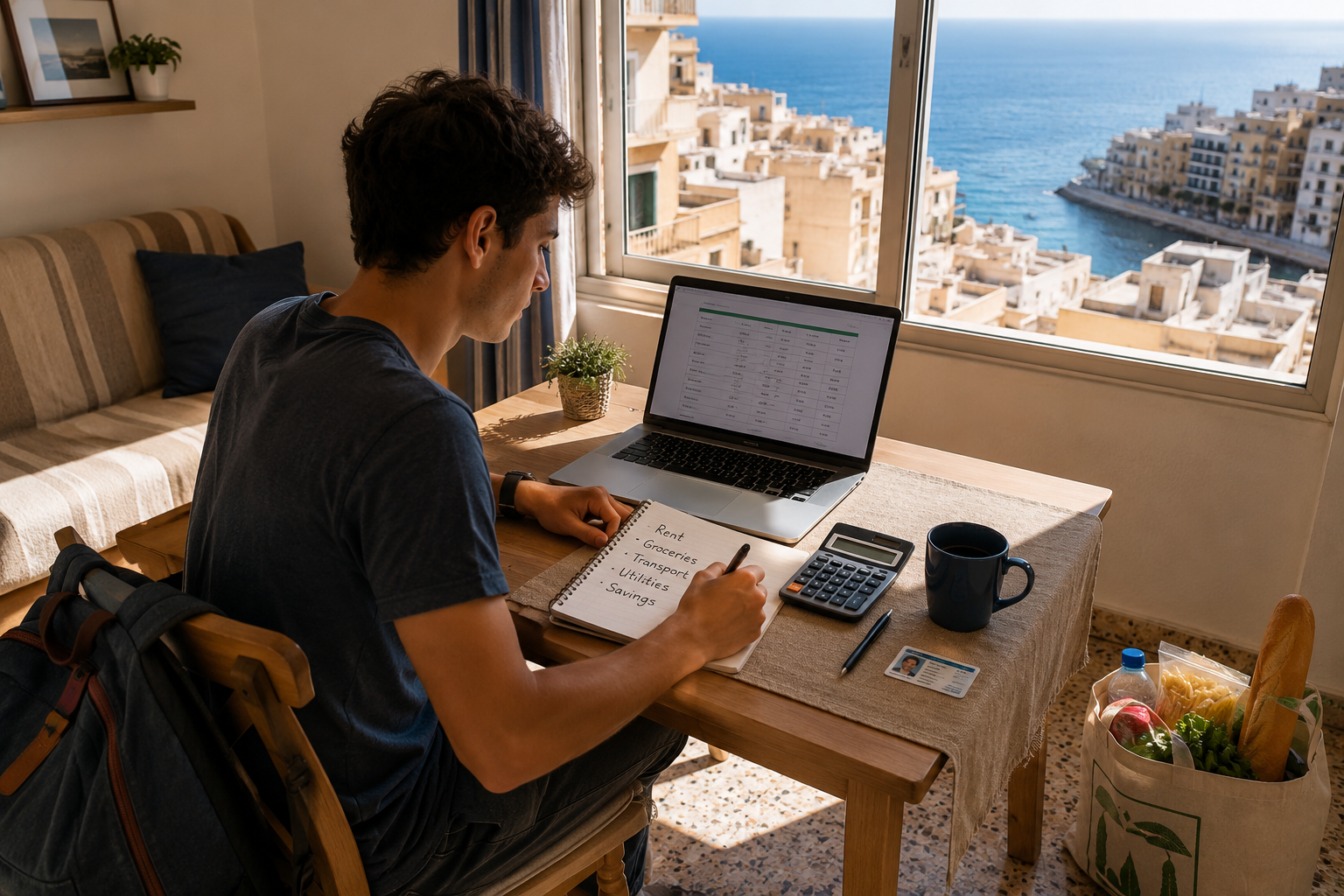
To manage the cost of living in Malta efficiently, one has to be prepared in advance. For example, one can save money through opting for shared housing, cooking meals at home, traveling by bus, and using student discounts. Moreover, tracking your monthly expenses using special apps is another method to avoid unnecessary expenditures.
Another vital step that will guarantee effective financial management is saving some amount of money for an emergency fund. In particular, you may experience various unexpected expenses like illnesses, trips, or increasing prices for utilities during your studies.
Conclusion
Living costs in Malta for students are still rather reasonable in comparison with many other places in the world where English is spoken as a language of study. Although prices on housing have risen lately, the right budget planning helps to live comfortably and not worry about finances too much. The majority of students can effectively control their budget, combining low-cost housing, moderate expenses, and good planning.
In conclusion, studying in Malta brings a lot more than just education to students’ lives. In this place, you will find a colorful international student society, a rich culture, and a unique Mediterranean atmosphere. Learning about student budgets in Malta and being prepared for this will help international students to have fun in their studies and in life.
Contact Us
Contact us for a free consultation for student or visitor visas. Our immigration experts are ready to assist you.