Introduction
Studying abroad is a great opportunity for students that can change the course of their academic and professional lives. Every year, many students apply to foreign universities in the hope of attaining international education and exposure, as well as career opportunities. However, many students are denied the opportunity to study abroad because they make simple mistakes in the application process.
The study abroad application process is a complex and time-consuming task. Students are required to submit their academic transcripts, personal statements, recommendation letters, and language proficiency certificates. Even the best and brightest students can hurt their chances of getting accepted into foreign universities by committing common mistakes in the application process.
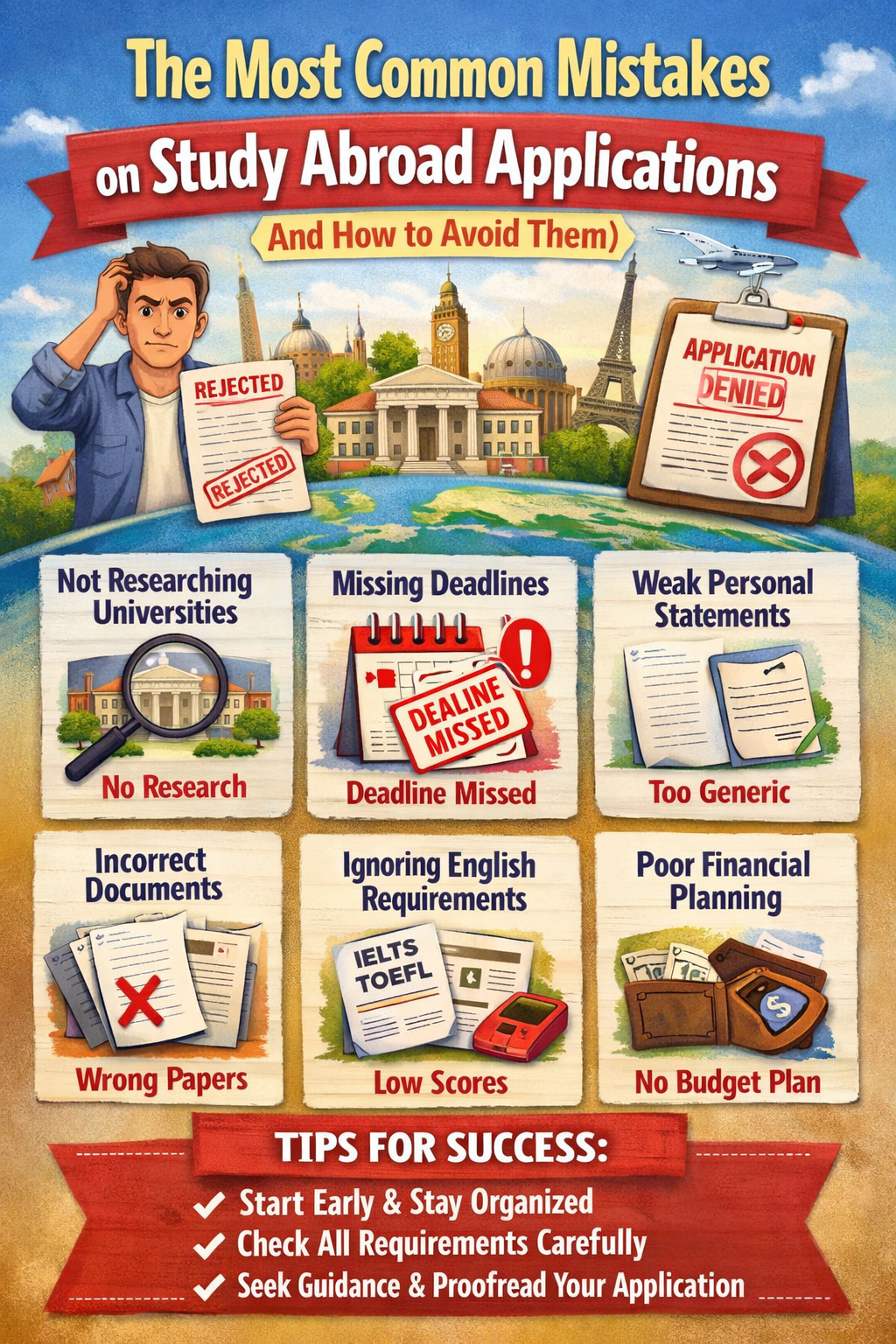
Understanding the common mistakes in the study abroad application process can help students avoid them and submit the best applications possible. The following are the common mistakes in the study abroad application process and tips on how students can avoid them.
Understanding the Study Abroad Application Process
Prior to making applications to international institutions for study abroad programs, it is essential for students to comprehend the key aspects of a study abroad application. In general, most international institutions require several vital documents from students who wish to study abroad. These documents help these institutions assess a student’s academic potential, interest, and readiness for study abroad programs.
Some of these documents include academic transcripts, personal statements, recommendations from teachers or mentors, and language proficiency documents such as IELTS or TOEFL results. In certain cases, these institutions may require students to undergo a series of tests or interviews as well.
Since these international institutions carefully scrutinize all study abroad applications, students need to be meticulous while making their applications.
Not Researching Universities Properly
One of the biggest mistakes students make when applying for a study abroad program is not researching the university properly. Many students apply for the program without having enough information regarding the requirements of the program and the opportunities they would receive after graduating.
For instance, a student interested in pursuing a career in business analytics might apply for a university program in business management. It is possible that the university does not provide any special training in the field of business analytics. Therefore it is important for the students to research the university properly before applying for the program.
It has been found that comparing several universities would be beneficial for the students, as they would be able to choose the program they are interested in pursuing.
Missing Application Deadlines
Another critical blunder made by students during the study abroad application procedure is missing key deadlines. Universities normally have stringent application deadlines, particularly for international students who need to complete their visa applications after being offered a place at a university.
A student who misses a deadline risks being rejected or having to wait for the next available place, which can cause them to postpone their academic plans by a few months or even a whole academic year.
A student can avoid this challenge by developing a detailed application timeline. By keeping track of key dates for application submissions, document submissions, and test registrations, a student can be sure that all requirements are met on time. A student should begin their application procedure a few months in advance so that they can submit quality work.
Writing Weak or Generic Personal Statements
The personal statement is one of the most significant parts of the application process when it comes to studying abroad. However, many students submit personal statements that lack the personal touch and seem too generic. Admissions officers read thousands of personal statements annually, and they seek students with genuine interest and personal goals.
One common mistake that many students make is using the same personal statement and failing to customize it for different universities. Essays that do not refer to the specific university program and do not indicate the reasons why the student chose the university may not be impressive.
Students should consider the personal statement as an opportunity to showcase their motivation, experiences, and aspirations. A good personal statement should indicate the reasons why the student is interested in the chosen course, the reasons why the university is the best choice, and how the university can help the student achieve their career aspirations.
Submitting Incomplete or Incorrect Documents
Incomplete documentation is also one of the reasons why universities reject study abroad applications. While applying for a study visa, universities demand certain documents. Such as academic transcripts, certificates, copies of passports, and language proficiency tests, etc. If a student fails to submit any of the required documents, their application may be rejected.
In some cases, students submit their documents in an incorrect format, or do not submit them in the required language, i.e., English, along with their application form. Some universities demand certified translations for documents that are not in English. If a student fails to comply with this requirement, they may experience unnecessary complications in the application process.
To avoid this mistake, the student should carefully check the university’s document checklist before submitting their application form.
Ignoring English Language Requirements
For international students applying to universities in English-speaking countries, it is essential to meet the requirements of language proficiency in English. Some universities may require standardized tests like IELTS or TOEFL to ensure that the applicant is capable of completing their studies in an English-speaking environment.
Applicants should avoid applying to universities by ignoring their minimum requirements for language proficiency in English or by waiting until the last minute to take their language proficiency tests. If applicants are unable to meet the minimum requirements for language proficiency in English, their applications may be rejected or placed on hold.
To avoid such situations, it is recommended that international students take their language proficiency tests well in advance of their university application deadlines. It is also recommended that applicants prepare well for their language proficiency tests to ensure success in these tests.
Poor Financial Planning
Financial planning is an integral part of the study abroad process. Students often do not realize the total cost of studying abroad, which is not just the tuition fee, but also the accommodation, transportation, health insurance, and living expenses.
Some students do not research the availability of scholarships and financial aid that can help them cut down on the cost of international education. Thus, problems occur in the visa application process and paying the tuition fee after the admission letter is received.
Students must research the cost of studying abroad, including the tuition fee and living expenses, as part of the application process. Students can also research the availability of scholarships and part-time jobs to make the process easier and more affordable.
Weak Letters of Recommendation
Letters of recommendation are important in the study abroad application process as they give insight into the student’s academic competence and character. However, students often make the error of choosing people who are not familiar with their work and achievements in their application process.
A generic letter of recommendation does not give the admissions committee relevant information about the student’s strengths and achievements. Effective letters of recommendation are those that give detailed examples of a student’s achievements, academic performance, and leadership characteristics.
Students should choose teachers, professors, and mentors who are familiar with their academic and personal characteristics to write effective letters of recommendation. Students need to give their recommenders enough time and provide relevant information about their achievements and goals to write effective letters of recommendation.
Neglecting Student Visa Requirements
After getting admitted to an international university, students need to apply for a student visa to pursue their studies outside their home country. In this regard, students often fail to understand the importance of studying student visa requirements and planning for the visa process early enough.
Students need to present financial documents and evidence of their admission when applying for a student visa. In this case, students who fail to plan early enough for the student visa process might experience problems when obtaining their student visa, thus missing the departure date for the commencement of their studies.
Students are encouraged to start planning for the student visa process as soon as they receive their admissions letters from the respective universities they applied to.
Tips for Building a Strong Study Abroad Application
To ensure a strong study abroad application, students need to be organized, plan, and pay attention to detail. To do this, students need to begin the application process early enough to ensure they are not rushing through the application process, as this might affect the quality of the application.
Being organized is also essential in ensuring a strong study abroad application. This can be achieved by using application tracking tools, which help students keep track of all the application requirements, including deadlines. Additionally, students can ask for advice from school counselors, education consultants, or university representatives, as this helps in ensuring a strong study abroad application.
Finally, students need to review all parts of the application before submitting it to ensure they are not missing any important information, as this might affect the outcome of the application process. This helps ensure a strong study abroad application, as small mistakes might affect the outcome of the application process negatively.
Conclusion
The process of applying to international universities is a crucial process for those who wish to acquire an international education and broaden their opportunities in their careers. Nevertheless, the process of applying to study in foreign countries is quite complex, and many applications are rejected not because the applicant is not qualified, but because of certain mistakes in the application process.
The most common mistakes in study abroad applications can be identified, and by avoiding them, the applicant can increase their chances of getting accepted by their dream university. With proper research and planning, the applicant can submit a high-quality application that reflects their academic capabilities. By avoiding the most common mistakes, the applicant can increase their chances of getting accepted by their dream university and starting their international education process.
Contact Us
Contact us for a free consultation for student or visitor visas. Our immigration experts are ready to assist you.