Introduction
University lectures are often fast-paced and may leave many students unable to grasp all the necessary information when writing down their notes. For sure, everyone has been in such situations when, after the lecture, they realized that they had missed some essential explanation or did not manage to follow the lecturer because of the fast pace of the class.
Thankfully, with the development of smartphone technologies, recording lectures has become one of the most popular approaches for studying. Having the possibility to listen to the lecture again is always a good chance to catch up with the hard part of the lesson. Nevertheless, recording all classes cannot be considered as the ideal approach to studying since, just like any other learning technique, it has its own advantages and disadvantages.
Reasons Why More and More Students Record Their Lectures
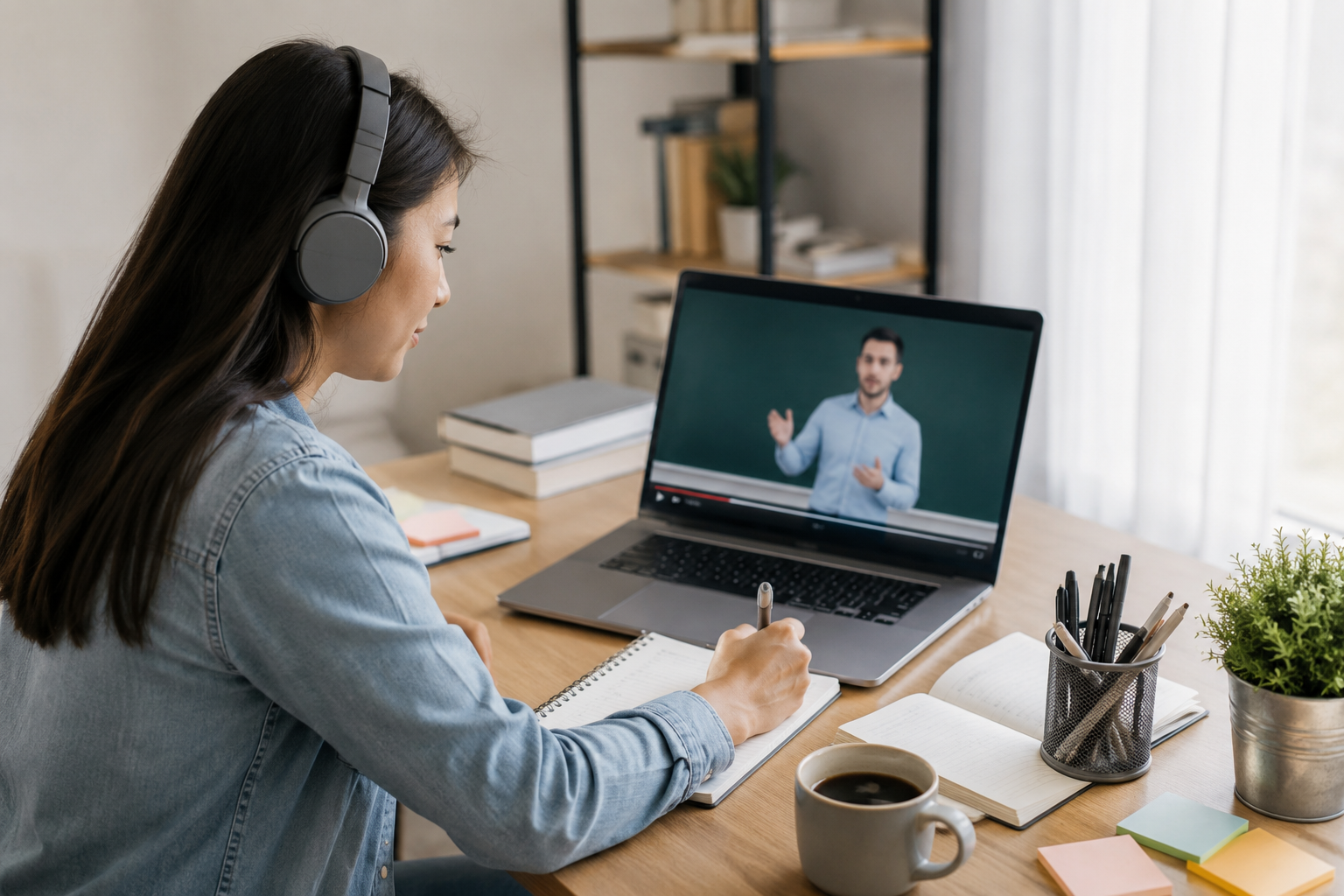
Advancements in technology have changed the nature of higher education, where learning tools are a part of daily university life. It is common for all students to have gadgets that can record high-quality audio. In contrast, many universities even have special lecture capture technologies that enable learners to watch lectures online. The mentioned factors have facilitated the process of recording lectures considerably.
Apart from the changes in technology, changes in preferences of the contemporary learner have played a considerable role in the growing popularity of lecture recording. Nowadays, most students want flexible learning and the opportunity to study at their own pace. Lecture recordings allow students to pause and replay sections they did not fully understand during the initial lecture. Moreover, such recordings help students who suffer from various diseases or learning problems, or who learn in a language other than the official language of the university.
Benefits of Recording Your Lectures
One of the main advantages of recording your lectures is the possibility of listening to the lecture several times. When attending the lecture, the teacher might speak very fast or use some difficult notions and terms that you might not understand immediately. You will have the possibility to listen to the lecture several times until you understand everything. Thus, you will be able to memorize everything well, which is especially useful during preparation for exams.
In addition, recording lectures is a good idea because you do not need to concentrate on writing everything the teacher says. Thus, you will be able to listen better to them, ask more questions, and pay more attention to what they say.
The other major benefit of lecture recordings is that they help address various kinds of learning styles. For example, auditory learners can benefit from listening to the explanations over and over again, and those who need extra time for processing information can stop whenever they want and listen again to the challenging parts. Moreover, international students or those who are not native English speakers will be able to benefit from recordings of lectures as well, since they will be able to learn some new vocabulary and understand things without being pressured by time.
The third major benefit of recording lectures is accessibility, since the lectures may be listened to by students who face health issues, disabilities, or other problems preventing them from attending classes. This means that such students will not fall behind their peers since they will be able to listen to the same explanations.
The fourth and final benefit of using lecture recordings is the opportunity to take more accurate notes. No matter how good one may be at taking notes, sometimes they may forget to write something down.
Disadvantages of Recording Lectures
Despite all the advantages listed above, it is necessary to understand the advantages and disadvantages of recording your lectures. First of all, one of the most considerable disadvantages is students’ reduced attentiveness in class. In case students know that a fully recorded lecture is going to be at their disposal, they will likely relax a little bit, listen more passively, and not take part in discussions. This attitude to classes usually leads to less understanding of the material and poor information retention.
The next drawback associated with the lectures’ recordings is procrastination. The majority of the students want to revise the material after lectures, but they do not have time for this. As a result, when it comes to the examination period, they try to revise all lectures within several weeks, which is very difficult and even stressful because they spend too much time on revision.
Finally, the third disadvantage of lecture recordings is the time students need to listen to them. In general, an hour-long lecture needs an hour to be revised. Compared to note revision, this way of preparation takes significantly more time.
Ethical issues and concerns about privacy should be considered carefully, too. Most institutions have guidelines about lecture recordings, and some professors do not allow students to make recordings unless they get permission first. In addition, classroom lectures are conducted by means of participation from many other students who may not want their words to be recorded. It is critical to follow guidelines from the institution and respect others’ privacy when making lecture recordings.
There are technical issues that can limit the effectiveness of recordings, too. Low-quality sound, external noise, lack of battery power, insufficient memory space, or any other interruption can cause incomplete recordings. Completely relying on technology without writing notes can pose certain academic risks.
Where Lecture Recordings are More Effective
Lecture recordings come in handy in subjects where there is a lot of technicality or complexity. Medical, engineering, legal, economic, and scientific subjects are some of the disciplines where complex concepts are introduced, necessitating frequent review by the student. Students can also make use of lecture recordings in instances where the teacher explains rapidly or covers many concepts in a relatively small amount of time.
Recording lectures becomes extremely useful to international students enrolled in a program in a foreign country, thus learning in their second language. The students can use the recording to improve their comprehension of the subject matter and the specific terminology associated with the subject. Students with approved accommodation requirements also make use of recordings in their education process.
When Recording Is Not Always Recommended
While recording all lectures can have certain benefits, it is not always recommended. In interactive seminars, laboratory classes, workshops, or discussions where active interaction plays an important role, participating in class can be much more helpful than listening to lecture recordings afterwards.
Also, if the teachers have provided all necessary materials, such as presentation slides or recordings, on the university’s learning management system, doing your own recording might give you no extra benefits. It is important to assess whether recording can help you learn something.
Best Practices for Making Successful Lecture Recordings
Students who choose to make recordings should do so wisely and thoughtfully. First of all, they should ask permission from the lecturer and follow the policies of the institution regarding making recordings in the classroom. Ethical norms will be helpful for both students and lecturers and will foster trust within the educational process.
Despite being allowed to make a recording, the student should take notes during classes. Instead of recording everything, he should write down ideas, examples, questions, and their own reflections. Thus, recording can help understand difficult pieces of information and not become distracted while listening to the lecture.
Making a recording review within one to two days after class also works well. In this case, the information is still fresh in the mind, and the student has time to revise their notes and complete them using the recorded information. Moreover, the student should properly name all files – including the course title and date of the class. At the end of the course, if required by the institution, the student should delete all recordings.
Other Ways to Record Lecture Materials
Recordings may not be required to pass lectures successfully since some ways of making notes, like the Cornell Note-Taking System or outlining method, stimulate listening skills and enhance information absorption. Annotating slide materials before the lecture and during the process of listening also enables learners to pay attention to the main ideas instead of transcribing all the information.
Modern universities have started using automated systems for making notes as well as giving access to official lecture recordings when allowed. Participating in study groups, going to the instructors’ office, and talking about tricky material with other students are other methods that help to study better.
Striking a Balance Between Lectures’ Recordings and Active Learning
The best-performing students understand that technology is only a medium of learning and not a replacement. While recording lectures may serve as a valuable aid to revise challenging subjects, it must never come at the expense of listening, thinking critically, participating actively, and taking notes. Integrating recorded lectures with proven study methods like testing oneself, spaced practice, summary, and revision will create a balanced learning approach.
Students need to think about what type of classes they attend, what kind of learner they are, and whether it makes sense for them to record lectures or not. This way, they will make use of technology without losing important academic skills.
Conclusion
The analysis of the advantages and disadvantages of using lecture recordings allows students to come to a better decision concerning one of the most popular learning tools today. The use of lectures provides a number of significant advantages, such as better revision, increased accessibility, minimized burden of note-taking, and an opportunity to review complicated ideas. However, the improper use of this tool might lead to the development of bad habits among students, such as passive learning and procrastination.
Thus, the best way to use lecture recordings is to use them as an auxiliary tool in the process of active learning. With the help of participation during lectures, effective note-taking, timely revision of the recordings, and observance of the rules set by the universities, students will be able to obtain maximum benefit from the usage of this innovative technology.
Contact Us
Contact us for a free consultation for student or visitor visas. Our immigration experts are ready to assist you.