When Your Child is in an Emergency Situation Abroad
Nothing scares a parent more than hearing an unexpected call that something terrible has happened to their child abroad. It could be an emergency related to illness, accident, crime, hospitalization, a lost passport, or any other major crisis. The feeling of distance can leave many parents feeling helpless and useless.
While the temptation to keep calling, booking tickets, and dealing with problems from abroad is tempting, the most sensible approach will be to take some organized actions. First, a parent needs to find out if their child is fine, then connect them to the necessary local help, and then, when needed, involve the university, insurance company, and embassy/consulate.
According to the official guidelines for students studying abroad, one should know how to contact local authorities and the student’s embassy/consulate in case of an emergency. Also, it is recommended to maintain communication with trustworthy family members.
Developing an action plan will not only help the parents overcome panic but will ensure that their child gets proper help as quickly as possible.
Step 1: Find out Exactly What has Happened
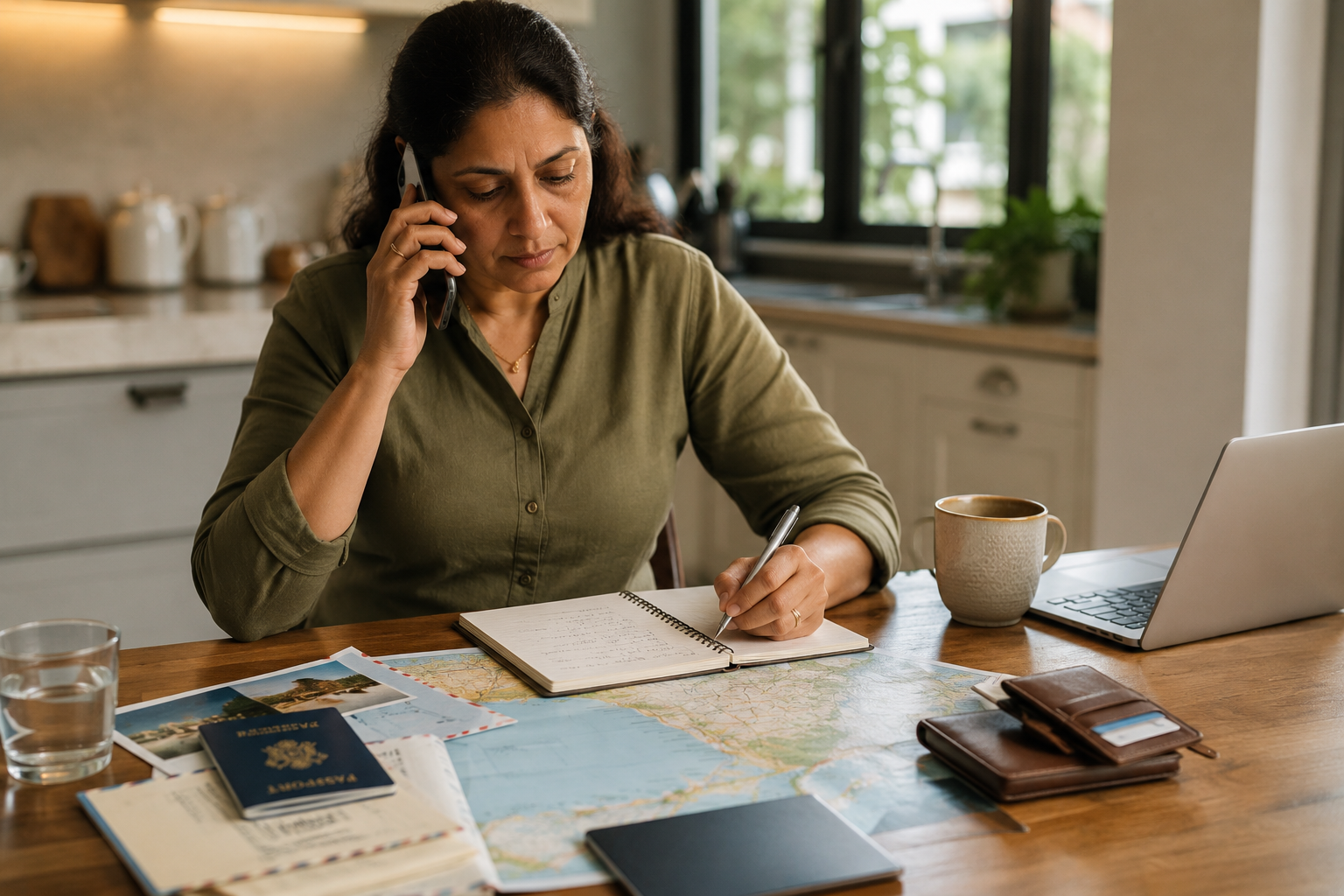
First of all, you need to establish the exact information about the incident. Ask your child where they are, what has happened to them, if they are currently safe, and if they need urgent medical or police assistance.
Establish their location: hospital, police station, accommodation, university, or somewhere else. Establish who they have with them and if there is anyone, such as a friend, roommate, university staff, doctor, or emergency worker, who is assisting them now.
It is important to distinguish the confirmed facts from assumptions. During the stressful conversation with a child, many facts might get mixed up. You need to write down the location, names of the people involved, their phone numbers, and all the instructions given by the child.
If your child cannot tell you something clearly, you need to identify first whether anyone else is physically with them.
Step 2: Contact Local Emergency Services
In case of an immediate threat to your child’s life or safety, local emergency services have top priority. This can happen when there is an accident, a medical problem, a fire, or violence or crime taking place.
Parents should make sure that they use the appropriate emergency service in the country where the child is staying. Numbers may vary depending on the country. They cannot simply think that the same number that works in their home country will also work abroad.
The children should be encouraged to make a call to the local emergency responders directly and listen to their directions. In case the children cannot make a call themselves, it can be done by a friend, university representative, or somebody else present at the scene.
What the parents have to do here is assist from a distance, but not substitute for local professionals. The official guide for studying abroad recommends that students learn how to contact local authorities in case of an emergency.
Step 3: Establish Reliable Communication
Once all the necessary measures to help the child are taken, decide on a reliable method of communication. It can be quite natural for a parent to start calling constantly, but constant calls can get in the way, especially if the child is being examined by a doctor or speaking with police or following emergency instructions.
In such a case, it would be better to agree that your child will inform you when they feel like doing it. You can also ask your child to tell you their location or the contact details of the person helping the child.
If your child cannot get in touch with you, find somebody who can help them do this. It can be a roommate, a friend, a university representative, a doctor, or anyone else close to your child.
It will also be quite helpful if the whole family appoints one member of the family to be a contact person. When everybody from the family makes calls to different authorities, it creates a lot of confusion.
Step 4: Contact the University or Study-Abroad Provider
The university may become one of the most helpful local contacts during an international student emergency. Get in touch with the international students office, the study abroad office, the student support service, the accommodation office, or the named emergency contact. Tell them what has happened and what facts you have found out.
Inquire whether the university has someone who could visit your child, communicate with local authorities, coordinate the work of the hospital, contact the accommodation people, and help the kid know what needs to be done further.
Try to name one person from the university who could act as the main contact throughout the emergency to avoid retelling the whole story to other people.
Finally, the university could offer assistance that no parent could give at a distance, especially when the student has difficulties with an unknown healthcare, legal, and administrative system.
Step 5: Contact the Embassy or Consulate
The child’s embassy or consulate may be a useful helper in some emergencies. The official guidelines of the consulate include situations like hospitalization, being a victim of crime, being arrested, and losing a passport as the ones for which consular assistance is provided.
What kind of assistance it would be is determined by the citizenship of the child and the circumstances of the case. The consular officials could help explain local procedures, inform about local resources, provide assistance with emergency travel documents, or keep in contact with the citizen in trouble.
However, the role of the embassy/consulate is not to replace local emergency services, local hospitals, and local police. It is their task to provide emergency assistance.
That is why parents should call the consulate or embassy only when it is within their competence to deal with the problem, but continue to cooperate with local authorities.
Step 6: Contact the Insurance Provider
In case the emergency involves any of the covered conditions, including illness, injury, hospitalization, or any other covered issue, reach the insurance provider as soon as possible.
Call the insurer’s emergency help number and inform them about the place where the child is, tell them about the situation, and the help provided to the child. Inquire whether the hospital or health care provider is in the policy network and whether prior authorization is needed.
As a rule, the coverage includes emergency treatment, hospitalization, medical evacuation, repatriation, and other types of emergency services. But each insurance policy has a different set of coverage options.
Do not think that the expense will be reimbursed automatically. For instance, the UK government suggests contacting both the insurer and travel provider in case of a serious incident or emergency abroad.
What to Do During a Major Crisis Abroad
Major crisis events are disasters, terrorist attacks, civil disturbances, bad weather, or other events that affect a wide geographical area. First of all, find out about the child’s safety and location. Ask him to follow instructions from local authorities, instead of traveling through unsafe places to get to a certain place.
Emergency messages can be sent by the university itself. Parents should monitor messages on official websites of the government and the embassy. Since social media can have incorrect information at times of rapidly developing situations, official sources are better to rely on in order to get instructions for evacuation, local restrictions, transport disruptions, or help from consular officials.
For example, the United States Department of State recommends that students in foreign countries know how to contact local authorities and the nearest embassy or consulate, as well as maintaining contact with family members or trusted people during emergencies.
Conclusion: Stay Calm and Stick to the Proper Sequence
In case of an emergency, parents of a child who is abroad tend to feel like distance takes away their possibility to assist in any way. Actually, there is much that parents can do: they can coordinate information, contact authorities, and support their children.
The proper sequence will be as follows: to ensure safety, if necessary, contact local emergency services, keep in touch, contact the university, contact the embassy or consulate (if it is needed), and contact the insurance company.
As different emergencies require different actions, the principle is the same: do not rush into anything and use professional assistance. There are people who are physically present at the place where the emergency happens, so parents should not worry and use the proper contacts.
Obviously, there is nothing that could prevent an emergency abroad; however, a proper plan of action will help parents act calmly.
Contact Us
Contact us for a free consultation for student or visitor visas. Our immigration experts are ready to assist you